How AI Simplifies Scheduling for ADHD
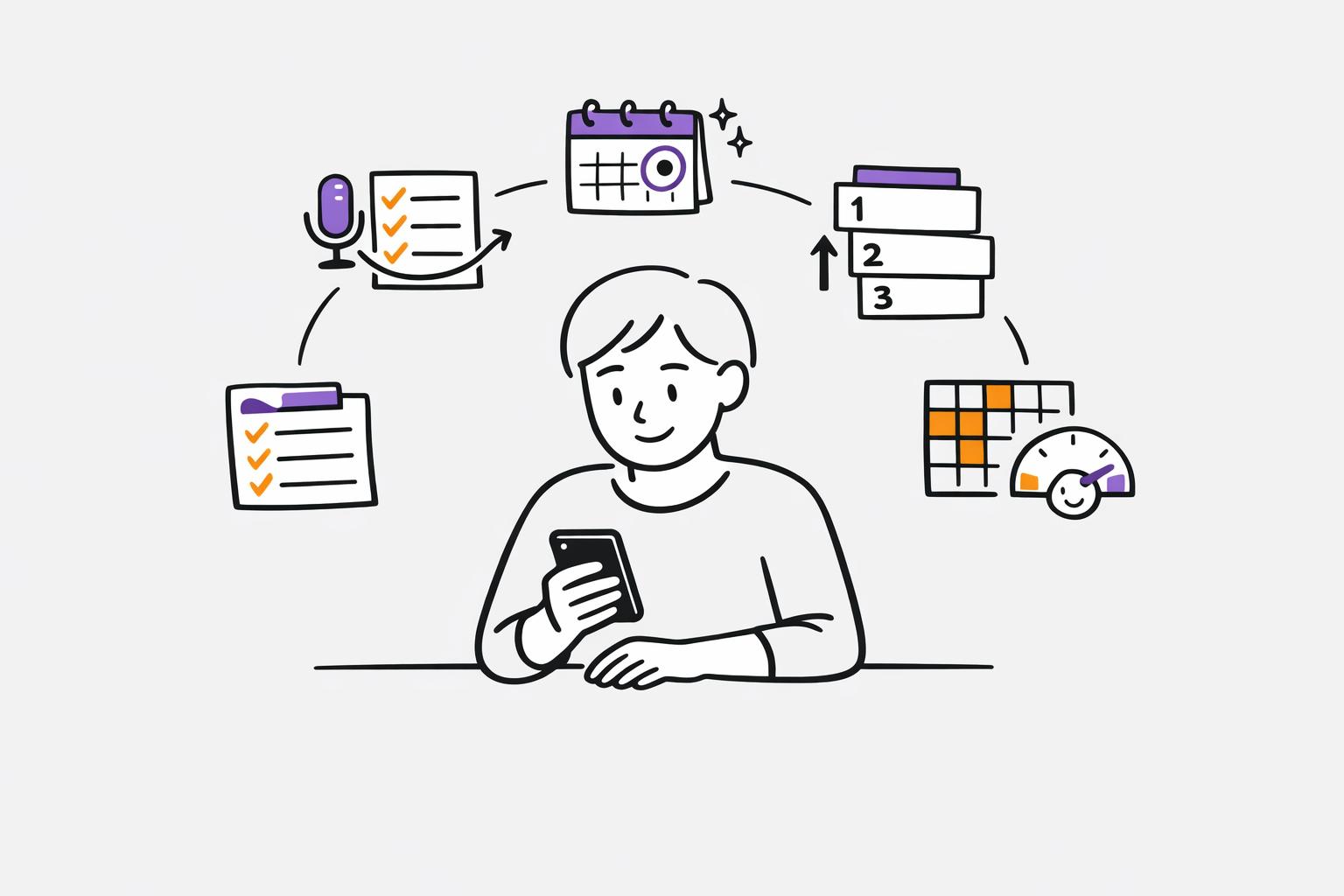
Learning how to plan your day with ADHD can feel overwhelming, but AI tools like Calma are making it easier. ADHD often affects planning and time management, leading to missed deadlines and frustration. traditional methods rely on skills that ADHD brains struggle with, like prioritizing and starting tasks, which is why many seek ADHD task management apps designed for brain-first planning. Calma works differently by automating these processes and reducing mental effort.
Here’s how Calma helps:
- Voice-to-Task Conversion: Quickly turn spoken thoughts into tasks in seconds, saving time and reducing friction.
- Smart Prioritization: Automatically organizes tasks based on deadlines and importance, helping you focus on what matters most.
- Automatic Due Date Detection: Identifies deadlines mentioned in voice inputs and schedules them instantly, addressing time blindness.
- Habit Tracking: Visual grids track progress without the pressure of perfection, encouraging consistency.
- Mood Tracking: Analyzes emotional patterns to align schedules with energy levels and productivity.
Calma’s 7-day free trial lets you explore these features, with affordable plans starting at $2/week or $39.99/year. It’s designed to reduce the challenges of ADHD scheduling, offering a simple and effective way to take control of your time.
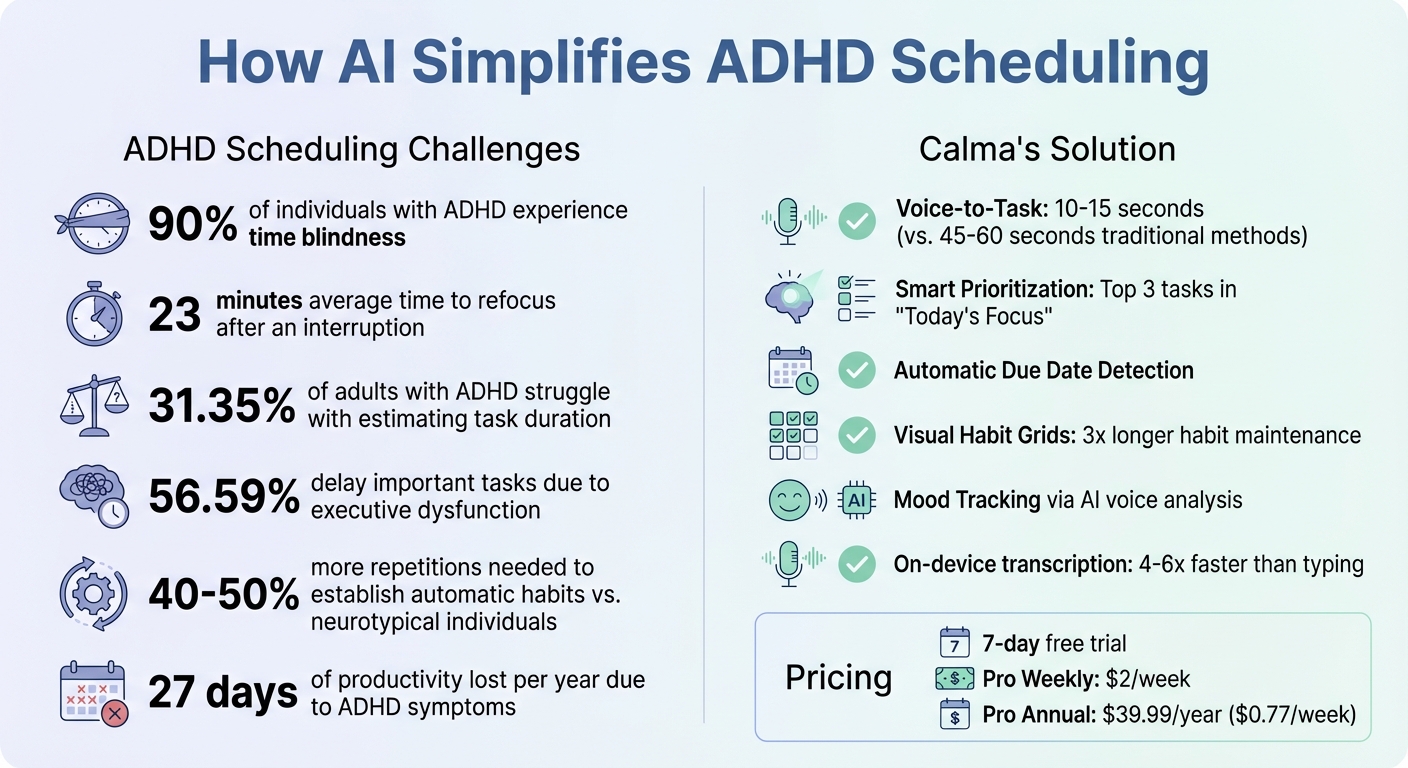
ADHD Scheduling Statistics and Calma Features Overview
ADHD Scheduling Challenges
Why Traditional Scheduling Feels Overwhelming
Traditional planners are built on the idea that you can estimate time precisely, rank priorities, and start tasks on cue. For people with ADHD, though, these assumptions often don’t hold up. Dr. Geeta Grover, a Developmental and Behavioral Pediatrician, offers a helpful analogy:
"Imagine your brain is like a big orchestra. This prefrontal part of your brain is the conductor of the orchestra. It makes sure that everyone is making music together... In ADHD brains, differences in the prefrontal cortex can hinder time management skills".
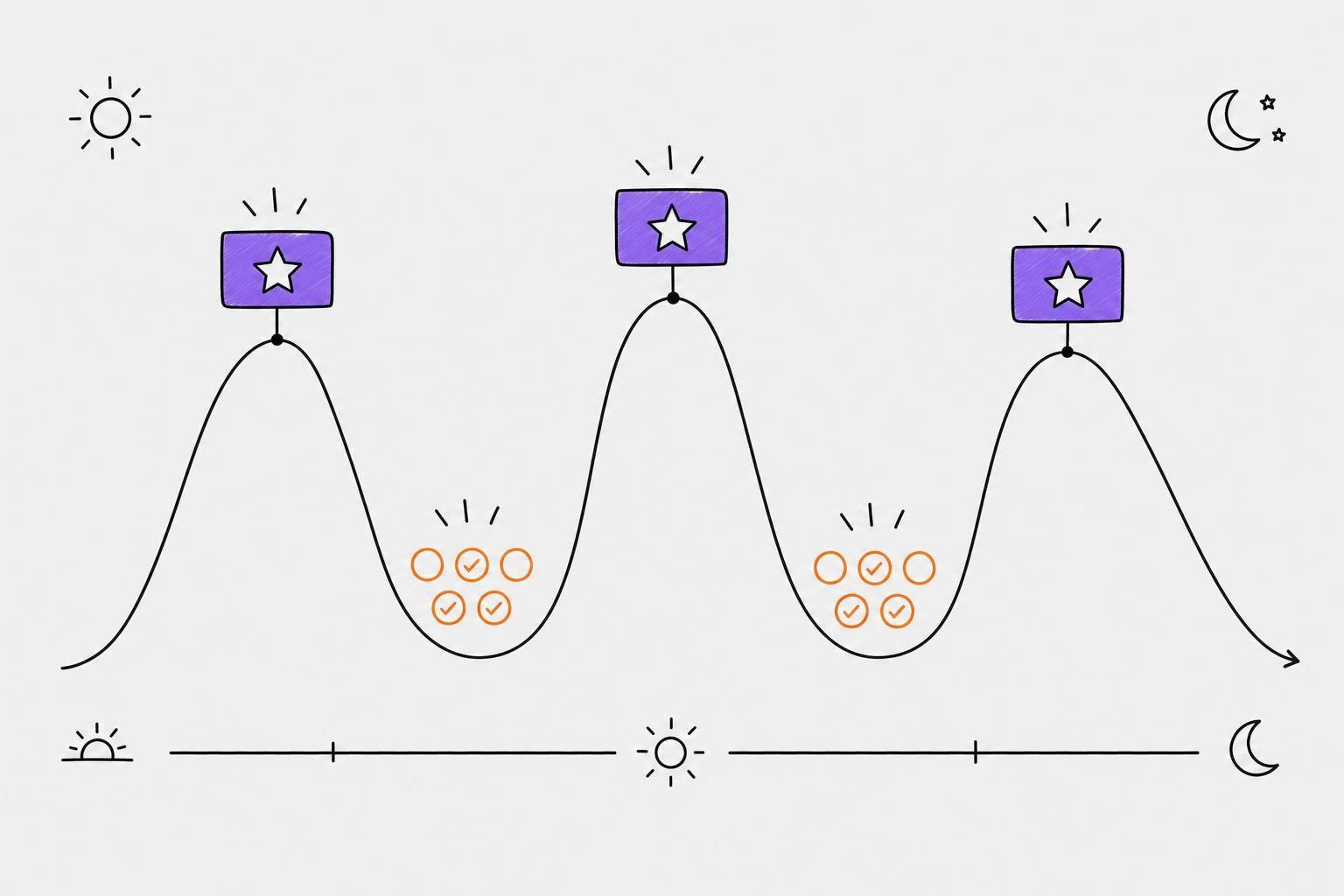
One of the biggest obstacles is time blindness, which affects up to 90% of individuals with ADHD. Instead of seeing time as a steady flow, many ADHD brains divide it into two categories: "now" and "not now". This makes future deadlines feel distant and abstract - until they suddenly become urgent, leading to a cycle of missed deadlines and last-minute scrambles.
Another challenge is decision fatigue. Blank spaces in a schedule demand constant, small decisions about what to do next. These micro-decisions can drain mental energy faster than the tasks themselves.
Then there’s the Rigidity Trap. Traditional schedules often feel too rigid for ADHD brains, especially when energy levels fluctuate throughout the day. Falling behind on a strict schedule can trigger feelings of shame, leading many to abandon the system entirely. As one ADHD advocate puts it: "'Just be more disciplined' is like telling someone with broken legs to walk better. It's not the solution".
These obstacles don’t just make scheduling hard - they create a domino effect of missed tasks and mounting frustration.
Missed Deadlines and Overcommitment
ADHD doesn’t just complicate scheduling; it can lead to a chain reaction of challenges in daily life. One major hurdle is task initiation. Even when you know exactly what needs to be done and feel motivated, your brain can struggle to get started. This often leaves you staring at your to-do list, stuck in a loop of indecision about what to tackle first.
Distractions make things worse. On average, it takes 23 minutes to refocus after an interruption. A single notification or phone call can completely derail your momentum. And then there’s hyperfocus, the flip side of ADHD. While it can be a powerful tool, hyperfocus can cause you to become so absorbed in one task that you lose track of other responsibilities - or even basic needs like eating.
All these factors - missed deadlines, difficulty starting tasks, and distractions - can take a toll on relationships at work and home. It’s not about caring less or being lazy. It’s about having a brain that processes time, priorities, and tasks differently, making even simple scheduling a complex challenge.
sbb-itb-1b3be24
5 Practical Ways to Use AI To Help with ADHD (from an ADHD Therapist in NYC)
How Calma Simplifies Scheduling with AI
Calma is designed to work alongside your ADHD brain, automating organization in a way that feels intuitive. Acting as an external executive function, it identifies urgent tasks and organizes them for immediate action. This eliminates the manual steps - like typing out task titles, choosing categories, and setting dates - that can overwhelm or lead to tasks slipping through the cracks.
Here’s how Calma’s standout features - voice capture, smart prioritization, and automatic due date detection - make scheduling easier and more efficient.
Voice-to-Task Conversion
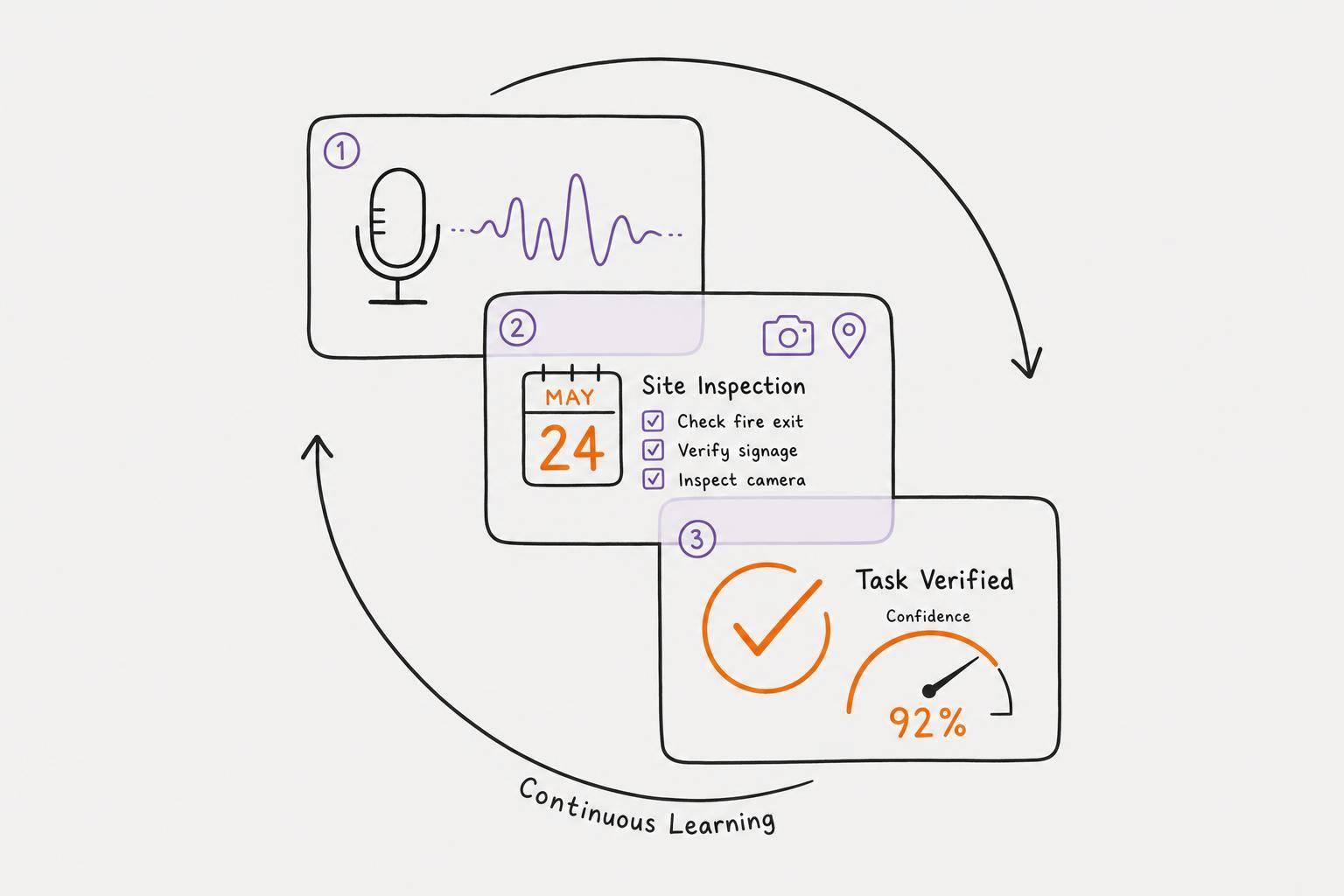
The quickest way to capture a thought with Calma is by speaking it. The AI processes your verbal input and turns it into actionable tasks almost instantly. This process takes just 10–15 seconds per thought, compared to the 45–60 seconds traditional methods like paper journaling might require.
"Being able to just talk and have the AI sort my messy brain dump into tasks is life-changing. It removes all the friction of getting started." – Sarah M., Freelance Designer
The voice recordings are processed either on your device or via a secure API, ensuring privacy. Even if your thoughts are scattered or buried in a long-winded explanation, the AI picks up on the context and tone to identify the actual tasks that need attention.
Smart Prioritization and Task Organization
After capturing your tasks, Calma’s AI automatically ranks them based on factors like deadlines, recurring patterns, and your past behavior. Instead of confronting an overwhelming to-do list, you’re presented with a focused "Today's Focus" section, typically featuring the top three tasks that need your attention.
For individuals with ADHD, this kind of support is crucial. Decision paralysis often makes manual task ranking difficult, leading to abandoned systems.
"It's more than just a planner; it's like an executive function support system in my pocket." – Marcus L., Software Engineer
Automatic Due Date Detection
Calma also recognizes dates mentioned in your voice recordings and assigns them to tasks automatically. For example, if you say, "finish the report by Friday" or "dentist appointment next Tuesday", the AI extracts the date and schedules it for you.
This feature is particularly helpful for managing time blindness - a common ADHD challenge. Research shows that 31.35% of adults with ADHD struggle with estimating how long tasks will take, and 56.59% delay important tasks due to executive dysfunction. By capturing deadlines as soon as they’re mentioned, Calma provides the structure needed to prevent tasks from fading from memory.
Tracking Progress and Building Habits with Calma
Calma isn’t just about organizing tasks - it’s designed to help you build habits that stick. For people with ADHD, habit formation often requires a tailored approach. Studies suggest that adults with ADHD may need 40-50% more repetitions to establish automatic habits compared to neurotypical individuals. Calma addresses this by combining ADHD productivity planner app features that make habit-building easier and more sustainable.
Visual Habit Progress Grids
Calma offers a visual habit tracker that lets you see your progress over the year at a glance. This feature provides immediate visual feedback, which is especially helpful for those who struggle with memory challenges. That quick dopamine boost from seeing your progress can be a powerful motivator to stay consistent.
Unlike traditional streak-based systems, Calma’s completion-rate tracking focuses on overall consistency rather than perfection. Missing a day doesn’t mean starting over - it’s about the bigger picture, which can help ADHD users maintain habits up to three times longer. This approach eliminates the pressure of an "all-or-nothing" mindset, making it easier to bounce back after a missed day.
To tackle object permanence issues common in ADHD, Calma includes home screen widgets that keep your habits front and center throughout the day. Whether you’re tracking meditation, exercise, staying hydrated, or even calling a loved one, this visual system helps you connect your daily actions to your long-term goals. It also creates space to reflect on how your emotions influence your productivity.
Emotion and Mood Tracking
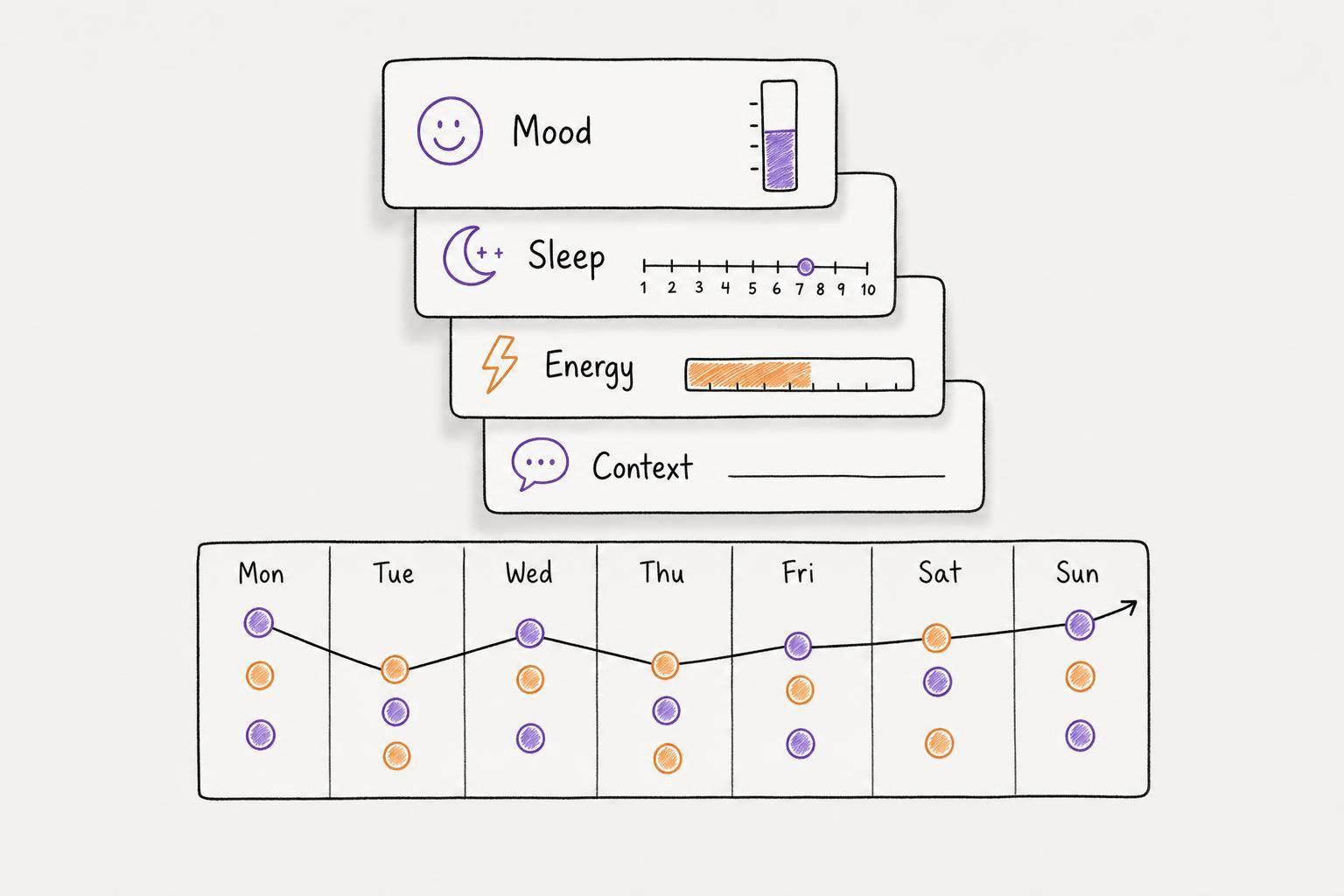
Calma takes it a step further by helping you understand the connection between your emotions and productivity. Its AI can analyze your voice journal entries to detect emotional states like stress, joy, anxiety, or calm - no manual input required.
This creates a judgment-free record of your emotional patterns over time. You might notice, for example, that certain tasks consistently trigger anxiety or that you’re more focused during specific parts of the day. Armed with these insights, you can adjust your schedule to align with how you’re feeling, making your plans more realistic and effective.
Calma Pricing: Affordable Solutions for ADHD-Friendly Scheduling
Calma combines streamlined task management with habit tracking, and its pricing makes it easy to try before committing. The app understands that for ADHD users, experiencing the tool firsthand is far more helpful than just reading about its features.
Grace Period: Free Trial Features
When you download Calma, you start with a 7-day Grace Period that gives you access to its core AI features for free. During this trial, you can explore tools like voice-to-task conversion (Voice Brain Dump), AI-powered task organization, automatic due date detection, and mood tracking through voice journal entries. You can also track up to 3 habits, experiment with all color themes, and enjoy on-device transcription that's 4 to 6 times faster than typing manually.
This trial period offers enough time to see how AI can simplify your task management. Many users notice a big difference in organization within just 2-3 days of using the daily brain dump feature. However, features like calendar integration, iOS widgets, and tracking more than 3 habits are reserved for Pro subscribers. After the trial, upgrading is seamless, unlocking even more capabilities.
Pro Weekly and Pro Annual Plans
After the Grace Period, you can opt for either Pro Weekly at $2/week or Pro Annual at $39.99/year. Both plans offer the same features: unlimited habit tracking (4 or more), full calendar integration, and home screen widgets to keep your habits front and center throughout the day. The Annual plan breaks down to about $0.77/week, making it the better choice for those ready to commit to long-term habit building.
Considering that ADHD symptoms can lead to losing up to 27 days of productivity each year, Calma’s Pro plans can quickly justify their cost. The Annual plan also means you won’t have to worry about weekly renewals - one less thing to keep track of.
Conclusion
Managing schedules with ADHD can feel overwhelming, but it doesn’t have to stay that way. The main struggle - executive dysfunction - makes it tough to organize, prioritize, and follow through on tasks using traditional methods. That’s where Calma steps in, acting as an external executive function to handle the mental load that often feels unmanageable.
With voice-to-task conversion, Calma captures your thoughts quickly, turning them into actionable tasks before they slip away. The AI then organizes those tasks into a structured plan with priorities and deadlines, so you’re never stuck staring at a blank page or debating what needs attention first.
The visual habit grids offer a more engaging way to track habits. Instead of static checklists, these grids provide real-time feedback, giving your brain the dopamine boost it craves to stay motivated. Add in mood tracking, and you gain valuable insights into how your emotional state affects your productivity. This helps you align your workflow with your ADHD rather than fighting against it.
Calma is also designed to be simple and affordable. Its Pro Annual plan provides a budget-friendly way to streamline your schedule and build consistent habits. Plus, the 7-day Grace Period lets you explore all the AI-powered features risk-free. If traditional planners or cluttered apps have left you feeling stuck, Calma’s clean, low-stimulation interface might be the solution you’ve been searching for to regain control of your time and productivity.
FAQs
How accurate is Calma at turning messy voice notes into tasks?
Calma excels at turning disorganized voice notes into concise, actionable tasks. It automatically transcribes the details, organizes them, prioritizes actions, and even assigns due dates. This makes managing tasks straightforward and efficient for users.
Can Calma handle changing priorities and unpredictable days?
Calma helps tackle changing priorities and unpredictable days by transforming voice notes into clear, structured tasks. It also automatically organizes and prioritizes them, offering a planning approach tailored to support ADHD brains. This makes staying organized manageable, even when plans take an unexpected turn.
Will Calma sync with my calendar and reminders?
Yes, Calma integrates with your calendar and reminders to help you stay on top of tasks, develop habits, and keep a journal. With voice input and AI-driven organization, it simplifies planning and lightens the mental effort needed to stay organized.