7 Ways Voice Notes Help ADHD Task Management
- Why Voice Notes Work for ADHD Brains
- 1. Capture Ideas Instantly Without Friction
- 2. Lower Mental Load and Prevent Overwhelm
- 3. Let AI Extract Tasks Automatically
- 4. Remember More by Speaking It Out
- 5. Prioritize Tasks with Smart Detection
- 6. Brainstorm Freely Without Stopping
- 7. Track Progress and Set Reminders Easily
- Wrapping It Up
- FAQs
If you have ADHD, using ADHD task management apps can help when staying organized feels overwhelming. Voice notes offer a simple way to stay organized by letting you speak your thoughts instead of writing them down. This approach reduces mental effort and helps you capture ideas before they slip away. Tools like Calma take it further by using AI to transcribe, organize, and prioritize your tasks automatically. Here’s how voice notes can help:
- Quickly record ideas without delays or distractions.
- Reduce mental load by speaking instead of typing.
- Organize tasks instantly with AI that detects priorities and deadlines.
- Boost memory by verbalizing thoughts, making them easier to recall.
- Prioritize tasks based on urgency and energy levels.
- Brainstorm freely without losing creative flow.
- Track progress with reminders and clear task lists.
Voice notes, combined with AI tools, make task management easier for ADHD brains by turning scattered thoughts into actionable steps.
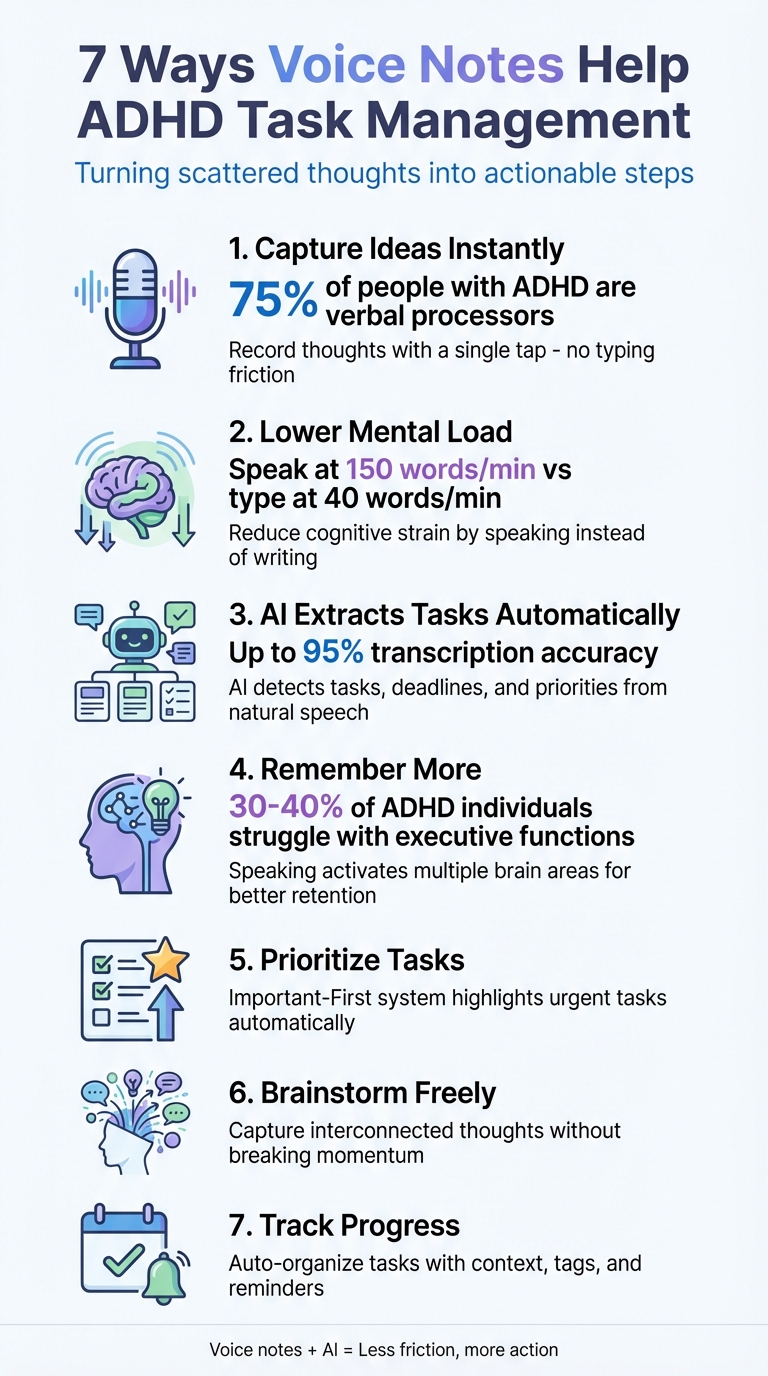
7 Ways Voice Notes Help ADHD Task Management
Why Voice Notes Work for ADHD Brains
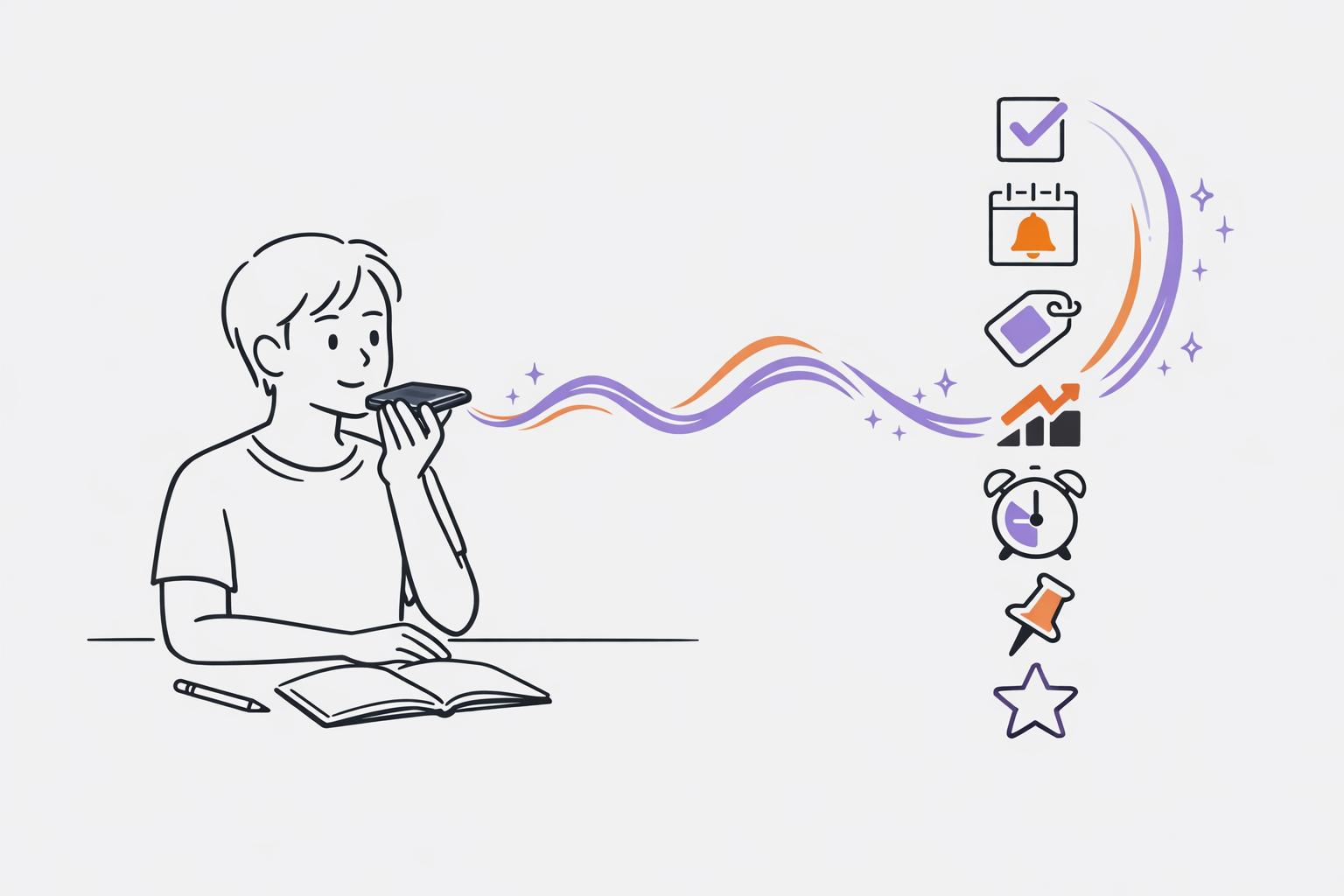
For people with ADHD, thoughts often race far faster than fingers can type. Voice notes bridge this gap, allowing you to capture ideas instantly and effortlessly as they come to mind.
Traditional note-taking can feel like juggling, especially when choosing the right ADHD productivity planner app. It requires you to start, process, and store information all at once - a task that’s particularly tough for those with ADHD. Studies indicate that 30% to 40% of individuals with ADHD struggle with these executive functions. Speaking, on the other hand, is a more automatic process. It sidesteps much of the mental strain tied to writing or typing.
AI takes this even further. Today’s voice-to-text tools can reach up to 95% accuracy, and advanced systems can recognize tasks, identify deadlines, and organize information as you speak. This means you can talk naturally while technology handles the structure, eliminating the need for a tedious review.
Voice notes also act as an external memory bank. For verbal processors with ADHD, saying thoughts out loud creates a kind of mental scaffolding, holding ideas outside your mind. This can help avoid the "ADHD tax", where brilliant ideas disappear as quickly as they appear. Tools like Calma make this even easier by transcribing your voice notes, organizing tasks, and linking them back to the original context. This ensures you never lose the reasoning behind your actions.
sbb-itb-1b3be24
1. Capture Ideas Instantly Without Friction
Ease of Capturing Ideas
Voice notes are a game-changer when it comes to recording ideas quickly. Unlike traditional note-taking, which often involves multiple steps and slows you down, voice capture allows you to record your thoughts with just a single tap. For individuals with ADHD, where even small delays can cause ideas to vanish, this simplicity is critical.
Studies show that 75% of people with ADHD are verbal processors - they think more clearly when speaking aloud. Writing, on the other hand, can be a struggle. It places extra demands on your working memory and motor skills, which can make it harder to get your thoughts down. Speaking directly bypasses these challenges, making it easier to offload ideas without unnecessary effort.
This effortless capture process lays the groundwork for organizing tasks more effectively.
Task Organization Features
Once your ideas are recorded, advanced AI steps in to turn them into actionable tasks. You can speak naturally, and the technology takes care of the rest. It identifies action items, recognizes deadlines, and categorizes your notes - all without you needing to sift through hours of audio later.
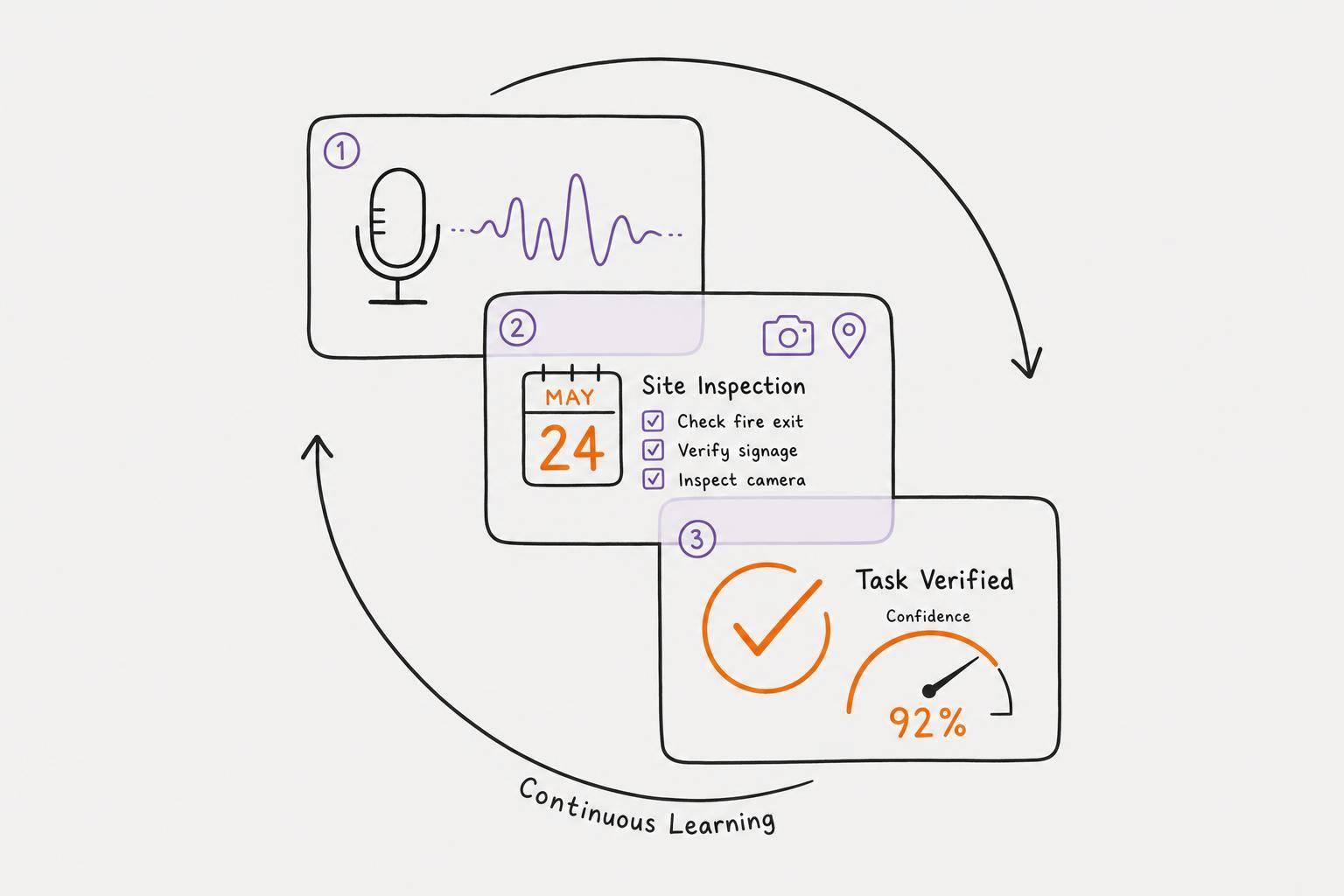
Calma takes this functionality even further. It transcribes your voice notes and integrates tasks directly into your daily planner. For instance, if you say, "I need to call the doctor tomorrow at 2:00 PM", Calma will create the task, set a reminder, and link it to your original note. This ensures that the context behind each task is preserved, solving the disconnect often experienced with traditional note-taking systems.
2. Lower Mental Load and Prevent Overwhelm
Support for Prioritization
For individuals with ADHD, keeping up with their own thoughts can feel like an impossible race. Imagine this: your brain is firing off ideas at over 150 words per minute, but your typing speed barely hits 40 words per minute. That gap means many thoughts vanish before they can be recorded. On top of that, writing involves multiple mental processes - task initiation, working memory, and fine motor skills - all of which can create roadblocks.
Voice notes offer a simple yet effective solution. By allowing you to speak at your natural pace, they remove the friction of trying to capture ideas manually. This aligns with research showing that people with ADHD often prefer verbal processing.
"The key is reducing cognitive load at the moment of capture. When ADHD brains don't have to think about HOW to capture an idea, they can focus entirely on the idea itself." - Dr. Sarah Chen, Neurodiversity Research Institute
This reduction in mental effort is just one piece of the puzzle. Using effective ADHD planning strategies is equally important for managing tasks without feeling overwhelmed.
Task Organization Features
Voice notes, while helpful, can present a new challenge: the need to listen back to lengthy recordings. For those with ADHD, sustaining attention for this can be a struggle. Modern AI tools tackle this by transcribing audio into searchable text and automatically pulling out tasks, dates, and priorities .
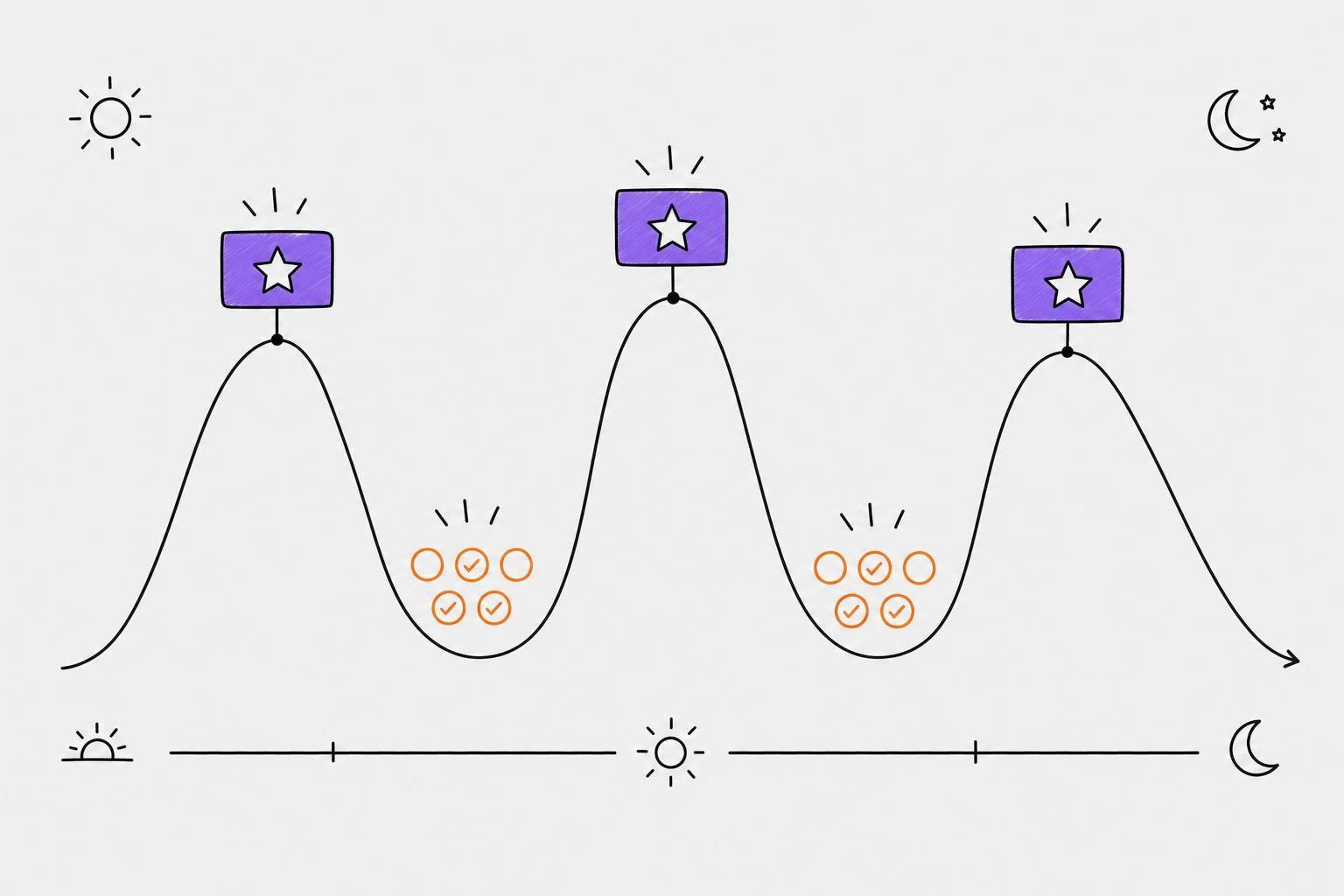
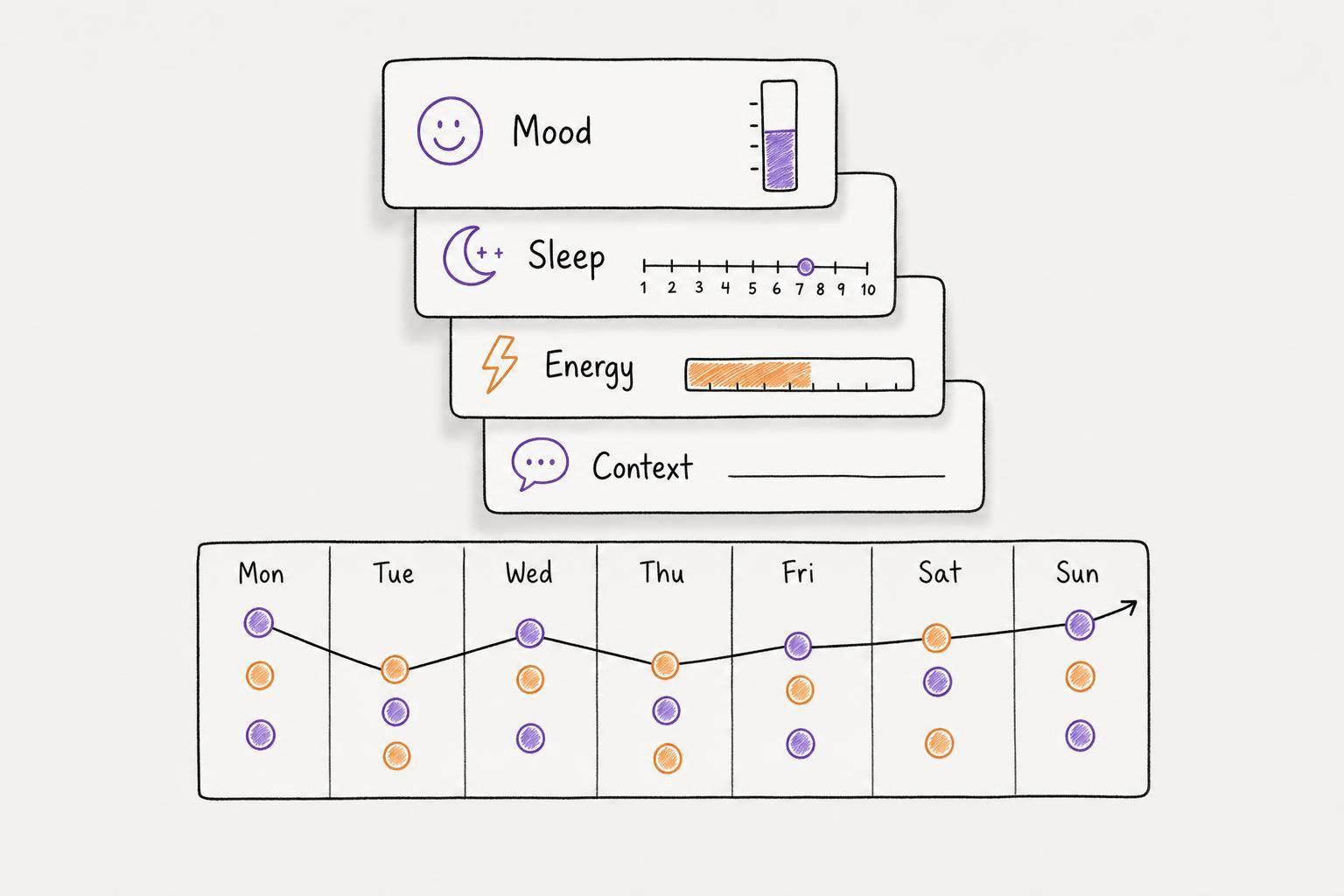
Calma goes even further by tailoring task management to your mental energy levels. Instead of presenting a long, daunting to-do list, it organizes tasks based on how much energy you have at a given moment. High-energy periods are matched with more demanding tasks, while simpler ones are saved for when you're feeling drained. This approach helps prevent the mental gridlock that often comes with trying to push through tasks when you're already overwhelmed. Using voice notes in this structured way doesn't just reduce stress - it transforms the entire process of managing your day.
3. Let AI Extract Tasks Automatically
Task Organization Features
Calma's AI doesn't just transcribe your voice - it turns your words into actionable tasks and organizes them effortlessly. You can speak naturally, without worrying about structure, and still end up with a tidy, well-organized task list. Each task is linked to its context, so nothing gets lost in translation, making it easier to follow through. This seamless organization lays the groundwork for tackling your to-do list with clarity.
Support for Prioritization
But it doesn’t stop there. Calma's AI takes the next step by automatically identifying which tasks need your immediate attention. Using an "Important-First" system, it highlights urgent items and places them right at the top of your list. This helps cut through the overwhelm of a long to-do list and guides you toward what matters most. By transforming your voice recordings and notes into prioritized tasks with deadlines, Calma lightens the mental load of deciding where to start - so you can channel your energy into actually getting things done.
4. Remember More by Speaking It Out
Memory Retention Benefits
Saying things out loud can help you remember them better than writing ever could. When you speak, you're activating several parts of your brain at the same time - like the areas responsible for hearing, movement, and language. This combined activity strengthens the neural connections that help you recall what you said. For people with ADHD, this is particularly effective since about 75% are verbal processors who naturally use speech as a way to organize their thoughts.
When you speak your ideas, you're also creating an external record of them. This "verbal externalization" takes the pressure off your working memory, making it easier for your brain to focus on processing the information.
"Verbal externalization reduces cognitive load on working memory, allowing you to process information more effectively. Your voice becomes a temporary storage system, holding ideas in the air while your brain catches up." - Harold Meyer, ADDRC.org
Another benefit of speaking out loud? It gives your brain a quick hit of dopamine. Verbalizing activates reward pathways in your brain, making the process of capturing tasks feel more satisfying and less like a chore. This boost can help motivate you to follow through on what you’ve said.
Calma takes this natural memory boost and builds on it by turning your spoken words into actionable tasks, keeping your ideas organized and easy to access.
Ease of Capturing Ideas
Calma makes sure your spoken thoughts don’t disappear into an "audio graveyard." It converts your voice recordings into searchable text and neatly organized tasks. Even better, each task links back to the original context, so you’re not left wondering what a vague note like "call about thing" actually means. Instead, when you review your list, you’ll see the full context of why you added that task in the first place.
This system not only keeps your ideas clear and accessible but also strengthens your ability to remember them later. It’s a simple way to stay on top of your tasks without losing the details that matter most.
5. Prioritize Tasks with Smart Detection
Support for Prioritization
Ever feel overwhelmed by a never-ending to-do list? For those with ADHD, long task lists can feel especially daunting. That’s where smart detection steps in. By automatically identifying the most urgent and impactful tasks, it takes the pressure off deciding what to tackle first.
Calma uses an Important-First system to bring the most critical tasks to the top of your list. No more sifting through everything manually - this system does the heavy lifting for you. It helps cut through the clutter, so you can focus your energy on what truly needs your attention, all while easing the mental strain of constant decision-making.
Task Organization Features
Once your high-priority tasks are pinpointed, Calma takes it a step further by organizing everything seamlessly. As you speak, the AI picks up on action items, adds relevant hashtags like #work or #errands, and even extracts deadlines from phrases like "by Friday" or "next week."
Another standout feature is the ability to tag tasks based on energy levels. For instance, you can label deep-focus tasks as @high_energy and simpler, routine items as @low_energy. This flexible system acknowledges that ADHD brains don’t always follow a strict schedule. By aligning tasks with your current energy and focus, you’re more likely to stay productive without feeling overwhelmed.
With Calma’s smart detection, even a jumble of voice notes transforms into a clear, prioritized to-do list that works the way your brain does best.
6. Brainstorm Freely Without Stopping
Building on how voice notes simplify capturing ideas and ease mental strain, brainstorming sessions thrive on uninterrupted creativity.
Quick and Effortless Idea Capture
When your mind is buzzing with interconnected thoughts - common for those with ADHD - traditional note-taking can feel like a bottleneck. It forces you to slow down and structure your ideas on the spot, often leading to lost inspiration. Voice notes, on the other hand, let you capture your thoughts as they come, keeping up with your brain's natural rhythm. This approach preserves the organic flow of ideas, making it easier to explore connections without breaking your momentum.
Boosts Memory and Clarity
Speaking your thoughts out loud does more than just record them - it helps organize them. This verbal process acts as a temporary mental framework, allowing you to spot patterns and refine ideas in real time. It’s like giving your scattered thoughts a chance to fall into place naturally.
Seamless Task Management
Once you're done brainstorming, Calma's AI takes over by transcribing your recording and pulling out actionable tasks. To make this process even smoother, wrap up your recording with a one-sentence summary of your main idea. This small step helps the AI focus on what matters most, ensuring your creative energy flows directly into organized, actionable steps.
7. Track Progress and Set Reminders Easily
Task Organization Features
Once you've captured your ideas, the next logical step is organizing and tracking them. Modern AI tools make this process seamless by pulling tasks, dates, and deadlines directly from your voice. For instance, if you casually say, "I need to call the dentist before Friday and pick up groceries this afternoon", the system transforms these words into a structured to-do list, ready for action.
What’s even better? Tasks stay linked to their original context. So, if you ever wonder why you added a specific task, you can simply tap back to the full transcription for clarity. These tools also categorize tasks into views like "Today" or "No Date", giving you a clear snapshot of what needs to be done and when.
Support for Prioritization
AI doesn't just organize tasks - it helps you prioritize them too. When you mention categories naturally - like saying, "I need to handle these errands" or "This is a follow-up task" - the system automatically tags them with labels like #errands or #followup. You can even guide the AI further by using phrases such as "morning task" or "big priority" while recording, ensuring your tasks are sorted in a way that matches your workflow.
Memory Retention Benefits
Speaking your schedule out loud does more than organize your day - it helps you retain it. When you say something like, "I have three hours before my meeting", it anchors your sense of time, reducing the risk of time slipping away unnoticed. This is especially helpful for verbal processors, as research shows that 75% of ADHD clients rely on external speech as a form of "cognitive scaffolding". By converting audio notes into text, you can quickly review tasks without the hassle of replaying lengthy recordings, making the whole process faster and less stressful.
Wrapping It Up
Voice notes offer a simple way to capture ideas, lighten mental strain, and turn scattered thoughts into actionable tasks - tackling some of the biggest challenges in ADHD task management.
When your mind races faster than your fingers can type, ideas often slip away before you can jot them down. Speaking out loud bridges that gap, creating a direct path from your thoughts to an external system.
This process becomes even more effective with AI automation. Modern tools can extract tasks, tag them, and even organize deadlines for you. The result? Clear action items without the hassle of manual organization - a huge relief, especially since 30% to 40% of people with ADHD face difficulties with executive functioning. By reducing the mental effort needed to capture ideas, you can focus entirely on your thoughts, not the logistics of recording them.
Try starting your day with a quick voice note to declutter your mind. Spend just a few minutes speaking every task, worry, or random idea, and let AI take care of the organization. For this, Calma is a standout option - it transforms voice notes into structured tasks, detects deadlines automatically, and keeps everything tied to its original context. Plus, it does all of this without requiring you to think about how to organize it.
With less friction and a lighter mental load, your thoughts can finally evolve into clear, actionable steps.
FAQs
How do I start using voice notes if I hate planning?
If planning feels like a chore, try using voice notes to capture your thoughts and ideas on the fly. With no need to worry about structure, you can record whatever comes to mind in the moment. Voice notes make it easy to grab those fleeting ideas without the hassle of traditional note-taking. Later, you can sort through your recordings and turn them into actionable steps. This method keeps things simple and is a great way to stay organized without feeling overwhelmed - perfect for an ADHD-friendly approach to planning.
What should I say so Calma turns a voice note into clear tasks?
To have Calma transform a voice note into actionable tasks, just speak naturally and clearly. Be specific about the task or action you want to achieve. For instance, you could say, "Plan barbecue menu" or "Research barbecue recipes." If necessary, you can also include details like due dates or priorities. Calma will take your input and organize it into clear, manageable tasks.
How do I keep voice notes from becoming another messy backlog?
To keep your voice notes from piling up into an unmanageable mess, consider using tools that can transcribe and organize them into structured, searchable text. Apps with automatic transcription and tagging features can make this process much easier, helping you stay on top of things and avoid mental overload. Regularly reviewing and categorizing your notes is key - this habit ensures they remain actionable and well-organized over time.