Plan Your Day With ADHD: 7 Strategies That Work

The problem isn't that you don't know what to do. It's that your brain operates on a different timeline than the rest of the world.
By data from the CDC, 15.5 million U.S. adults live with ADHD—nearly double the estimates from just a few years ago. And if you're one of them, you've probably experienced that unique frustration of sitting down to plan your day, only to find yourself spiraling into distraction within minutes. Your thoughts race faster than you can organize them. Priorities blur together. Time becomes meaningless.
But here's what research reveals: your struggle isn't a character flaw. It's not laziness or lack of discipline. According to ADHD authority Russell Barkley, Ph.D., ADHD isn't a disorder of knowing what to do—it's a disorder of doing what you know at the right times and places. The gap isn't between you and your goals. It's between your racing mind and systems designed for linear brains.
This guide walks you through seven evidence-based strategies to finally plan your day in a way that actually works with your ADHD brain instead of against it.
Quick Answer:
The core issue with ADHD and daily planning is executive dysfunction—your brain struggles to organize, prioritize, and manage time, not because you can't think, but because you think too much, too fast, and without filter. Solutions involve cognitive offloading (externalizing your thoughts), flexible time management, and strategic prioritization rather than rigid schedules.
Key Takeaways:
- Executive function is the real bottleneck, not motivation—ADHD affects the "doing," not the "knowing"
- Brain dumps and voice-based capture bypass the typing barrier that kills planning momentum
- Flexibility beats rigid plans—build buffers, prioritize 3 things instead of 30, embrace context-switching
- Cognitive offloading tools handle the organizational heavy-lifting your executive function can't manage alone
- Visual feedback systems (habit grids, pixel trackers) provide dopamine-friendly progress markers that motivate continuation
Table of Contents
- Why Your ADHD Brain Resists Planning
- The Executive Function Gap
- Strategy 1: The Brain Dump
- Strategy 2: Flexible Time Blocking
- Strategy 3: The Rule of Three
- Strategy 4: Build in Buffer Time
- Strategy 5: Leverage Body Doubling
- Strategy 6: Create Visual Feedback
- Strategy 7: Automate Recurring Decisions
- How Cognitive Offloading Changes Everything
- Real Example: From Chaos to Clarity
- Common Planning Mistakes You're Making
- FAQ
 Your ADHD brain processes multiple thoughts simultaneously, creating planning paralysis rather than clarity
Why Your ADHD Brain Resists Planning
The moment you try to plan your day, something shifts. You sit down with good intentions. Maybe you open a blank planner, a new app, or a piece of paper. Then, immediately, your mind fractures. That email you forgot to send this morning. The three tasks you never completed yesterday. A random idea that feels urgent. The anxiety about whether you're actually going to do any of this.
Meanwhile, a neurotypical brain might experience this once in a while. Your brain experiences it as the baseline state of existence.
According to workplace mental health research, adults with ADHD report an average of 21.6 more days of lost work productivity per year than their non-ADHD peers due to inattention, disorganization, and executive dysfunction. That's nearly a month of lost productivity—not because you're underperforming when you're focused, but because your executive function system is working overtime just to stay organized.
The cruel part? Those lost days accumulate not because you're incapable. They accumulate because traditional planning systems—the ones everyone else relies on—demand that your weakest cognitive function do all the heavy lifting. Linear planning requires sustained attention. Color-coding requires decision-making. Typing requires the ability to translate your racing thoughts into organized text at normal typing speed.
Most ADHD adults I've talked to describe it this way: My brain thinks in fractals, but everyone else's planning systems are built in straight lines.
The Executive Function Gap
Let's define what we're actually fighting here. Executive function isn't about intelligence. It's not about motivation or work ethic. According to clinical research on ADHD and executive function, around 40%-60% of adults with ADHD experience significant executive function challenges, leading to difficulties in time management, organization, and decision-making.
Executive function is the mental supervisor—the part of your brain that organizes competing thoughts, prioritizes tasks, manages time efficiently, estimates how long things will actually take, and makes split-second decisions about what matters right now. For you, that supervisor is overwhelmed.
Here's the research that should change how you see yourself: According to a WHO global study, adults with ADHD experience 22.1 excess annual days of lost role performance, including 8.4 days completely out of role, 21.7 days of decreased work quantity, and 13.6 days of decreased work quality. The gap isn't between you and high achievers. It's between your effort and your output—and that gap exists because your executive function system is working at 60% capacity while your emotional intensity and hyperfocus run at 180%.
The real kicker? Research on time perception in ADHD shows that adults with ADHD have problems in the estimation of time intervals, in the reproduction of time intervals, and in the management of time. You don't just struggle to organize your tasks. You literally perceive time differently. Your brain's clock runs at a different speed than the external world's.
When you tell yourself "I'll plan for 30 minutes," your brain might experience it as 5 minutes or 90 minutes. When you estimate a task will take an hour, you're drawing from a skewed internal sense of time. This isn't fixable through motivation. It's neurological. And the only solution is to build systems that account for this reality.
 The executive function gap: Your brain prioritizes stimulation over urgency, making rigid planning systems ineffective
Strategy 1: The Brain Dump
This is where you start. Not with a planner. Not with a to-do list. With a brain dump.
The concept is simple but transformative: capture every single thought, task, worry, and random idea that's cluttering your mental space without trying to organize it yet. The goal is to externalize the chaos. Your brain is a terrible filing system, but it's an excellent generator. Let it generate. Let it spill.
For most people, this means writing things down quickly on paper or typing them into a notes app. But here's where ADHD enters the equation. If you have to type all those racing thoughts, you'll lose half of them before your fingers catch up. Your brain moves at 100 mph, but typing maxes out at maybe 40. That mismatch creates loss—you lose the idea mid-thought because your hands can't keep pace.
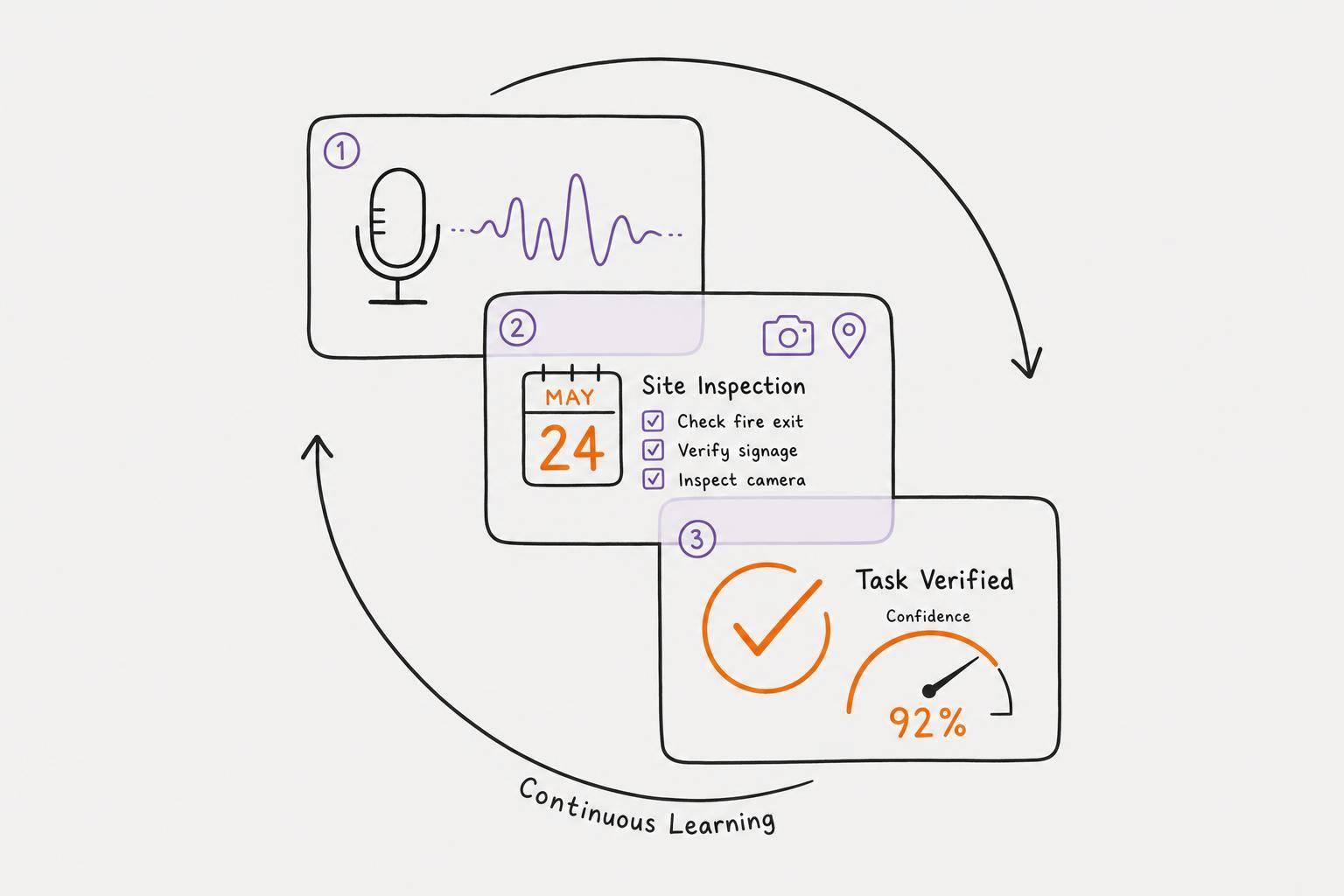
This is why voice-based capture changes the game for ADHD planning. Instead of your thoughts getting filtered through your typing speed, you simply talk. Your brain's natural rhythm—rapid-fire, non-linear, associative—matches the input method. You're not forcing your neural patterns into a linear mold. You're expressing them as they actually occur: connected, fast, and sometimes circling back to earlier thoughts.
From your brain dump—whether it's written, typed, or spoken—your system should extract the core tasks without requiring you to do that extraction manually. If you're dumping via voice, your planner should listen, identify actionable items, and suggest priorities. This moves the cognitive load away from you and toward the system.
The brain dump typically produces 15-40 items. Most people feel immediate relief from this step alone. Your thoughts no longer feel like they're competing for attention in your head. They're safely captured externally. Now you can actually organize them.
Strategy 2: Flexible Time Blocking
Traditional time blocking kills ADHD productivity. Here's why: the system assumes you know exactly how long tasks will take and that you'll stick to arbitrary time windows. You already know from research that your time perception is warped. You also know that context-switching—which traditional rigid schedules demand—tanks ADHD focus.
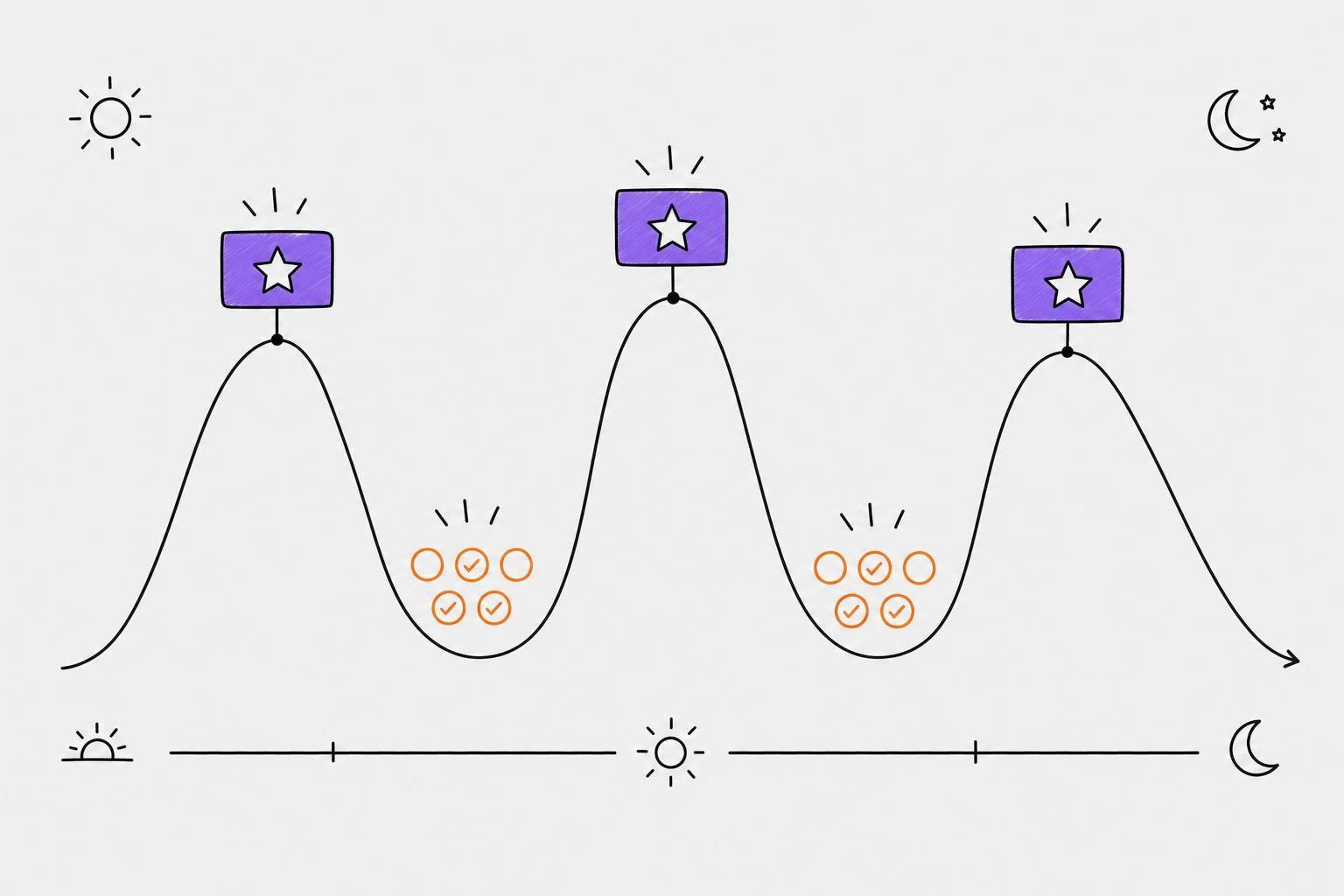
Flexible time blocking works differently. Instead of scheduling 9-10 AM for email and 10-11 AM for deep work, you assign types of tasks to specific times based on your natural energy cycles and cognitive state. Maybe 9-11 AM is your "high focus window"—your brain's naturally most alert. During that window, you do your highest-priority work regardless of how long it takes. Maybe the task finishes in 45 minutes or takes 2 hours. You're not bouncing between tasks to hit artificial time boundaries.
The flexibility here is crucial. You're blocking energy types and priority levels, not specific tasks. This means if you finish your focused work early, you can immediately move to your next focus block instead of wasting two hours pretending to do something that only took 45 minutes. If something takes longer than expected—which it will, because your time perception doesn't align with reality—you're not throwing your entire day off schedule because you're not operating on a rigid schedule.
Build in transition time between blocks. Your ADHD brain doesn't pivot smoothly. It needs a 5-10 minute buffer between context switches. Use this time for something semi-passive: a walk, water, a quick text—nothing that requires focus but also nothing that starts a new task.
The key insight here: rigid schedules work for brains that naturally context-switch smoothly. Your brain needs structures that accommodate quick pivots and don't penalize you when your time perception is off.
 Flexible time blocking organizes by energy and task type rather than rigid hour increments
Strategy 3: The Rule of Three
Sit down and write down everything you could possibly do today. For most ADHD brains, that list is enormous. 30, 40, maybe 50 items. And here's the trap: you look at that list, feel overwhelmed, and do none of it.
This is decision paralysis. Too many options, insufficient executive function to narrow them down. Solution: The Rule of Three.
Pick three things. Just three. Not five, not seven, not ten. Three. These are your "must-dos"—the tasks that, if you accomplish nothing else, would make your day feel successful.
This matters because ADHD brains have a legitimate capacity issue with decision-making. Each additional option requires more executive function. At a certain point, your system crashes. Three is the sweet spot where you feel like you have meaningful choices without triggering paralysis.
The magic happens when you actually complete these three things. Your brain releases dopamine—the neurotransmitter that ADHD brains are chronically low on. That dopamine reinforces the behavior. Suddenly, planning your day becomes a dopamine-generating activity instead of an anxiety-generating one.
Beyond those three, everything else is optional. Gravy. Nice to have. But your brain's satisfaction is contingent on those three. This changes the psychology of your entire day. You're not failing if you do three things and skip the rest. You're winning because you hit your target.
Most ADHD planning systems fail because they try to make you a productive machine. The Rule of Three acknowledges a fundamental truth: your brain works in sprints, not marathons. Give it a small, achievable sprint. Win. Repeat tomorrow.
Strategy 4: Build in Buffer Time
ADHD time perception isn't a character flaw. It's a cognitive difference. The research is clear: your brain's internal clock runs at a different pace than the external world. So stop fighting it. Start accounting for it.
When you estimate a task will take 30 minutes, assume it'll take 45. When you think something will be quick, schedule it for longer than it should logically take. This isn't pessimism. It's realism. You've probably proven this to yourself a thousand times: you underestimate how long things take, and then you feel like you're failing because you "didn't have enough time."
You probably did have enough time. Your time perception just didn't match reality. Buffer time closes that gap.
Beyond task buffers, build transition buffers between different types of work. If you're switching from creative work to administrative work, your brain needs a mental reset. A 5-minute buffer—not scheduled task time, just existence time—helps your executive function actually make that switch instead of dragging one task's mental state into the next task.
Bonus benefit: when tasks finish faster than your buffer allows, you get a compressed timeline. Suddenly, you completed something "early." Your brain celebrates. Dopamine. Momentum. Suddenly, planning doesn't feel like you're always behind.
 Buffer time accounts for the gap between your time perception and external time flow
Strategy 5: Leverage Body Doubling
This is one of the most underrated ADHD hacks, and it's deceptively simple: other people's presence makes you more functional.
Body doubling doesn't mean someone monitoring you or holding you accountable. It means sharing physical or digital space with someone else while you both work independently. Sit in a coffee shop. Jump on a Zoom call with a friend both working on their own tasks. Be in the same room while someone else reads or works on their laptop.
The mechanism is neurological: your ADHD brain has an engagement deficit, not a motivation deficit. External stimulation—even passive stimulation like someone else's presence—helps your brain reach adequate arousal levels to focus. Alone in your home office, your brain is understimulated. At a coffee shop surrounded by ambient activity and other people, your brain has just enough stimulation to function at normal capacity.
Build body doubling into your planning strategy. Schedule focused work for times when you can arrange it: coworking spaces, libraries, coffee shops, or even online coworking sessions. Schedule administrative work for when you're isolated. This might feel counterintuitive (shouldn't you hide away for deep work?), but it's calibrated to how your brain actually operates.
If you can't physically arrange body doubling, create it virtually. Coworking video calls exist specifically for this. You and someone else log on, set a timer for focused work, and do your tasks independently on camera. The presence activates your focus without requiring interaction.
Strategy 6: Create Visual Feedback Systems
Dopamine is your brain's primary currency. ADHD brains are dopamine-deficient. This isn't motivation dysfunction. This is neurochemistry. You need more external dopamine hits than the average person to feel driven.
Traditional to-do lists provide one dopamine hit: checking something off. That's it. For most ADHD brains, one small hit per task isn't enough momentum. You need visual feedback that's frequent, immediate, and satisfying to look at.
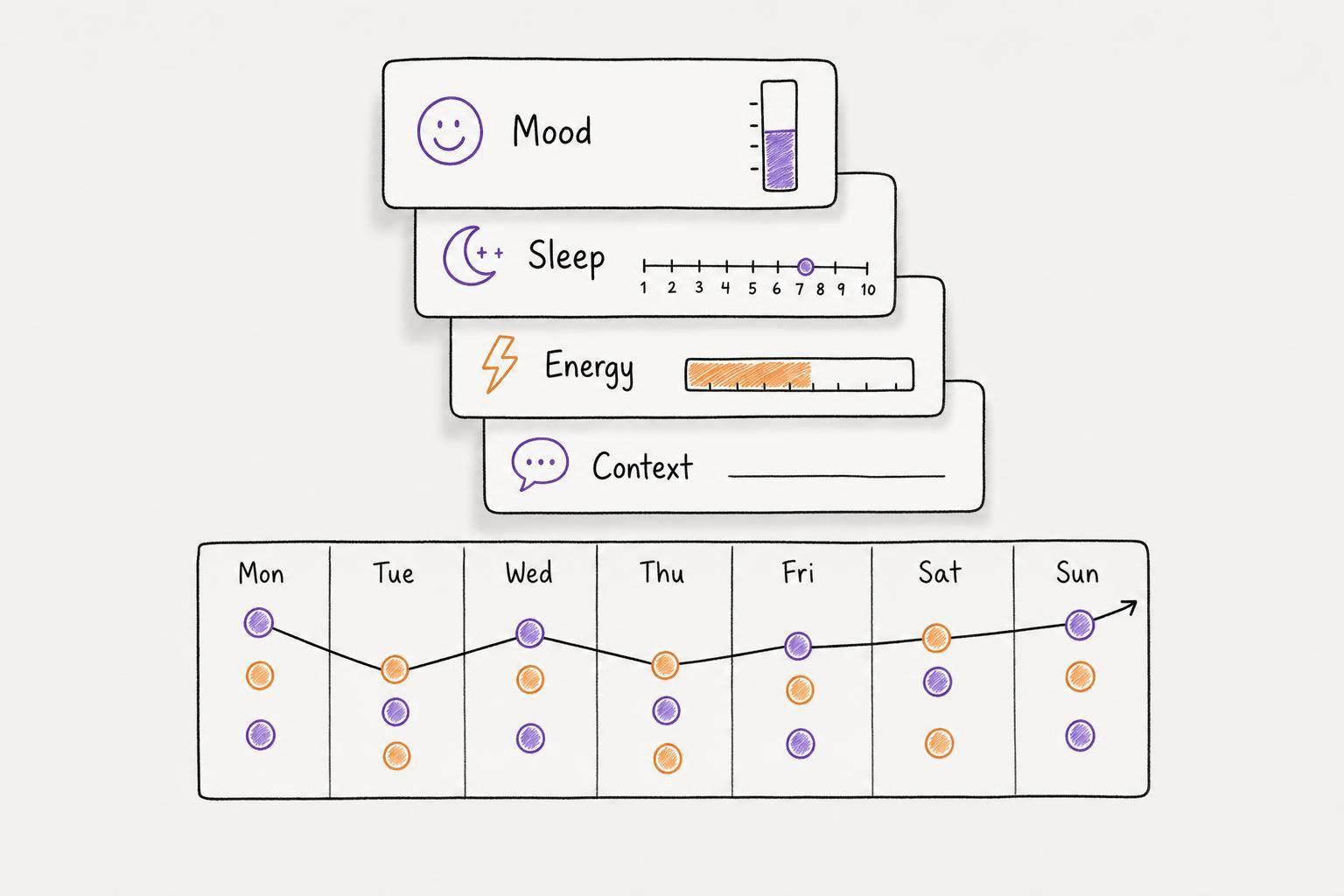
This is why habit trackers with visual grid systems (pixel grids, streak counters, heat maps) work so well for ADHD planning. You can see your progress. Literally see it. On a calendar. In color. That visual feedback becomes a dopamine source. Your brain wants to see that grid filled in. It wants that streak to continue. Suddenly, the habits that should feel obligatory feel rewarding.
The key is making the feedback system beautiful to you. If you hate looking at it, it won't work. If the visual is compelling, you'll check it multiple times a day. Each check is a small dopamine hit. Each completed day is a bigger hit.
This is one area where most planning systems fail: they're optimized for function, not for dopamine generation. For ADHD brains, dopamine generation is function. A visually boring task list is a task list you won't use. A beautiful pixel grid tracking your habits is a system you'll actually engage with every single day.
 Visual feedback systems provide frequent dopamine hits that motivate ADHD follow-through
Strategy 7: Automate Recurring Decisions
Decision fatigue is real, and ADHD brains experience it intensely. Every decision costs executive function energy. By the end of the day, you're depleted. This is why you see ADHD people making impulsive decisions late in the day or just shutting down rather than choosing between options.
Automate the recurring decisions. What time do you wake up? Set it. What time do you start focused work? Set it. What's your first task of the day? Pre-decide it. What do you do during your transition buffers? Decide once, repeat automatically.
This isn't rigidity. It's friction reduction. You're not locking yourself into a prison. You're removing the daily decision about things that don't actually change day to day. This conserves executive function for things that actually matter: prioritizing tasks, handling unexpected changes, making real decisions.
Recurring decisions might include: same wake time, same first task category, same buffer activities, same three daily priorities template (not the same tasks, but the template for identifying three). Each decision you automate is mental energy you recover for actual problem-solving.
How Cognitive Offloading Changes Everything
Here's what all of these strategies share in common: they're designed to move cognitive load away from your executive function and onto external systems.
Your brain excels at generating ideas, making creative connections, and hyperfocusing on interesting problems. Your brain struggles with organizing, categorizing, time management, and sustained attention on non-stimulating tasks. Effective planning systems acknowledge this difference. They don't try to fix your brain. They offload the organizational burden.
This is where tools designed for ADHD brains specifically make the difference. General-purpose productivity apps assume you have functional executive function. They expect you to organize your thoughts, categorize them, assign priorities, and manage time effectively. They treat executive function as present and working. For ADHD brains, that's the opposite of helpful.
Apps built specifically for ADHD do the organizational work for you. Voice input lets you dump your racing thoughts as they occur without the typing bottleneck. AI-driven systems extract priorities from your brain dump. Visual habit trackers generate dopamine automatically. Simple interfaces reduce decision paralysis. Minimal required organization means you're not spending mental energy fighting with the system.
This cognitive offloading is the bridge between understanding what you need to do and actually doing it. Russell Barkley's research isn't just saying ADHD is a "doing" problem. It's saying the gap between knowing and doing is where executive dysfunction lives. Close that gap by removing the organizational burden from your shoulders and putting it into a system designed to handle it.
Learn more about how ADHD task management apps bridge that knowing-doing gap.
 Cognitive offloading moves organizational burden from your executive function to an external system
Real Example: From Chaos to Clarity
Let me walk you through what this actually looks like in practice. Meet Alex—a 28-year-old marketing professional who identified as ADHD two years ago.
Before implementing these strategies, Alex's planning process looked like this: Open the default Notes app. Write 40 different tasks and ideas. Spend 45 minutes staring at the list feeling paralyzed. Close the app without doing anything. Feel anxious all day about everything left undone.
Sound familiar?
Alex's manager mentioned he was missing deadlines on creative work he was capable of. The disconnect was always the same: good ideas, good execution when focused, but poor follow-through because he couldn't prioritize or manage his time effectively.
Here's what changed:
The Brain Dump: Instead of typing everything, Alex used voice input to capture his morning thoughts. No organizing, no filtering. Just talk. The system extracted actionable tasks automatically. 40 scattered thoughts became 12 clear items. Instant relief.
The Rule of Three: From those 12 items, Alex identified three non-negotiables. One creative task (Alex's strength, high dopamine). One administrative task (necessary, low dopamine). One collaborative task (body doubling opportunity). Everything else fell into the "nice to have" category.
Flexible Time Blocks: Alex scheduled his high-focus block from 9-11 AM (confirmed peak energy time through a week of tracking). The creative task lived here. Administrative work lived in a lower-energy afternoon block. Collaborative work got scheduled for 3 PM when the body doubling coffee shop was busiest.
Buffer Time: Alex's time estimate for the creative task was always "3-4 hours." The reality was usually 5+ hours. New plan: schedule 6 hours with the understanding it might finish in 4. When it finished in 4.5, Alex felt ahead rather than behind.
Body Doubling: The coffee shop at 3 PM became non-negotiable work location. No isolation. Just ambient stimulation and other people. Suddenly, administrative work—the stuff Alex previously procrastinated on—got done consistently.
Visual Feedback: Alex started tracking one habit: "focused block completed." A simple pixel grid. One pixel per day. Seeing the streak build created momentum. Missing a day felt notable. Completing 5 days in a row? Dopamine spike.
Result: Within three weeks, Alex's manager noticed deadline consistency. Within two months, project completion rate increased. Within three months, Alex described the shift this way: "I stopped fighting my brain and started working with it."
Common Planning Mistakes You're Making
Let's address what's probably sabotaging your planning right now, because these patterns are nearly universal in ADHD planning failures.
Mistake 1: Using Systems Built for Neurotypical Brains
You've probably tried Notion. Or ClickUp. Or some elaborate spreadsheet system. These tools are optimized for linear thinking and sustained executive function. They require you to do the organizational work. They assume you'll maintain consistency through discipline alone. That's not ADHD unfriendly—it's ADHD hostile. When these systems don't work, you assume it's your fault. It's not. It's the system. Find tools designed for your brain, not against it. Learn how ADHD task management apps compare to traditional productivity tools.
Mistake 2: Trying to Plan Too Far in Advance
Your ADHD brain operates in present time. You can hyperfocus on an immediate deadline. You can barely conceive of three weeks from now. Stop trying to plan your entire month. Plan your week. Plan your day. Plan your next three tasks. The future will arrive when it arrives, and you'll deal with it then. Attempting to force your brain into long-term planning will only create anxiety and failure.
Mistake 3: Setting Too Many Priorities
You already know the Rule of Three exists for a reason. But most ADHD adults resist it because "there's so much to do." There is. Plenty. But your brain can't execute on more than a few things daily. It's not about motivation. It's about capacity. Working within your actual capacity feels like failure in a culture that demands unlimited output. It's actually success. You're not failing. You're being realistic.
Mistake 4: Failing to Build in Recovery Time
After a focused work block, your ADHD brain needs a recovery period. Not another task. Not even a different task. Just existence time. A walk. Scrolling. Spacing out. If you schedule focused work back-to-back with no buffer, by the third block your focus collapses. You're not lazy. You're depleted. Build recovery into your planning.
Mistake 5: Expecting Consistency From a Inconsistent System
Your ADHD brain doesn't produce consistent energy, focus, or follow-through. Some days you're on fire. Some days you can barely function. Some tasks hyperfocus you. Some feel impossible regardless of importance. Your planning system needs to accommodate this variability, not fight it. A plan that only works on your best days isn't a plan. It's a fantasy. Build flexibility in.
FAQ
Q: Why can't I just use willpower to follow through on my plan?
A: Because willpower isn't the variable. Russell Barkley's research is explicit on this: ADHD is not a disorder of knowing. You know what to do. It's a disorder of executing on what you know. Your brain's executive function—the system that initiates action, maintains attention, and manages time—is neurologically different. You're not lacking willpower. You're working with a different operating system. Willpower will deplete faster, but it's not the actual problem. Changing your systems is. Read more on executive function deficits in ADHD.
Q: Why does typing my to-do list feel so paralyzing?
A: Your brain generates thoughts faster than your fingers can type. That mismatch creates a bottleneck where you lose ideas mid-thought. By the time you've typed three items, you've forgotten seven others. Voice input removes that bottleneck. Your mouth moves closer to your brain's actual speed. Try voice-to-text for brain dumps and notice the difference.
Q: How do I know if I'm "really" ADHD or just bad at planning?
A: If traditional planning systems consistently don't work for you despite genuine effort, and if you experience the other markers—time distortion, hyperfocus on interesting things with difficulty on important-but-boring things, racing thoughts, task initiation difficulty—you're probably ADHD. That said, diagnosis isn't a prerequisite for using these strategies. They work regardless. They're designed for how your brain actually operates, whether you have a diagnosis or not.
Q: Will these strategies work if I don't want to use an app?
A: Partially. The brain dump, Rule of Three, flexible time blocking, buffer time, body doubling, and automated decisions all work without apps. Visual feedback is harder to manage without systems, but you can use a physical habit calendar. The more manual your system, the higher the friction. Friction means lower follow-through. But if you prefer paper and low-tech systems, they'll work better than no system at all.
Q: What if nothing works? What if I try all of this and still can't plan?
A: Then your executive dysfunction might benefit from external support beyond planning systems. This could mean ADHD coaching, medication, or therapy focused on ADHD executive function. There's no shame in that. Planning systems are tools. Sometimes the neurological gap is large enough that tools alone aren't sufficient. That's not failure. That's data. Use it to seek appropriate support.
Q: How long does it take before these strategies actually work?
A: You'll feel different immediately—the brain dump creates relief in minutes. But behavior change takes longer. Expect 2-3 weeks before new planning patterns feel automatic. Your brain needs time to learn the new system. By week 4, most people report it's their default approach.
Q: Can I combine all these strategies or start with just one?
A: Start with one. Brain dump is usually the easiest entry point. That alone will transform your clarity. Once that's flowing, add the Rule of Three. Then time blocking. You're building momentum, not overwhelming yourself. Each strategy reinforces the others, but you don't need all seven simultaneously to see improvement.
Conclusion: Your Brain Works Differently. Your Planning Should Too.
The struggle you've experienced planning your day isn't a reflection of your capacity. It's a reflection of the mismatch between your brain and systems built for different brains.
ADHD executive dysfunction is real. It's neurological. It means your brain processes information differently, operates in different time cycles, requires more stimulation to reach adequate focus, and moves from thought to thought faster than linear systems accommodate. That's not a flaw. It's an operating system difference.
The seven strategies in this guide work because they stop fighting your brain and start working with it. Brain dumps capture your racing thoughts. The Rule of Three prevents decision paralysis. Flexible time blocks honor your natural energy fluctuations. Buffer time accounts for your different time perception. Body doubling provides the stimulation your brain needs. Visual feedback generates dopamine for follow-through. Automated decisions conserve executive function for what matters.
They're effective because they acknowledge the actual problem: not that you don't know what to do, but that the gap between knowing and doing requires different supports than general productivity systems provide.
The secret isn't getting more disciplined. It's getting smarter about how you design your environment and your systems.
Start with the brain dump today. Tomorrow, identify three priorities. Next week, add flexible time blocking. Let each strategy build on the others. You'll notice the difference immediately. By month two, you'll wonder how you ever operated without these shifts.
Your brain works fast, creatively, and in beautiful associations. Let your planning system match that speed instead of constraining it.
Want to explore how voice-based planning with AI-driven prioritization changes the game? Discover how cognitive offloading tools transform daily planning for ADHD brains.