ADHD Planning: Emotional Overload Solutions
- What Triggers Emotional Overload During ADHD Planning
- How to Manage Emotional Overload in the Moment
- Systems That Prevent Emotional Overload During Planning
- Building Long-Term Emotional Resilience for Planning
- Build Your ADHD Emotional Resilience: Help for Adults Who Feel Deeply (with Tamara Rosier, Ph.D.)
- Conclusion: Balancing Planning and Emotional Regulation
- FAQs
Feeling overwhelmed by planning with ADHD? You’re not alone. Emotional overload, or "emotional flooding", is a common challenge for individuals with ADHD. It occurs when intense emotions like frustration or anxiety make even small tasks feel unmanageable. This is tied to how the ADHD brain works - an underactive prefrontal cortex struggles with planning, while an overactive amygdala amplifies stress.
Here’s what you need to know:
- Why it happens: ADHD brains face challenges with prioritizing, working memory, and time management, making planning emotionally draining.
- Triggers: Vague tasks, looming deadlines, and decision fatigue often lead to overload.
- Solutions: Learn to calm your nervous system, break tasks into smaller steps, and use ADHD task management apps to reduce mental strain.
- Long-term strategies: Combine professional treatments like therapy and medication with lifestyle habits like better sleep, nutrition, and reflection on past episodes.
This article breaks down practical tips to manage emotional overload, build effective planning systems, and reduce stress so you can take control of your day.
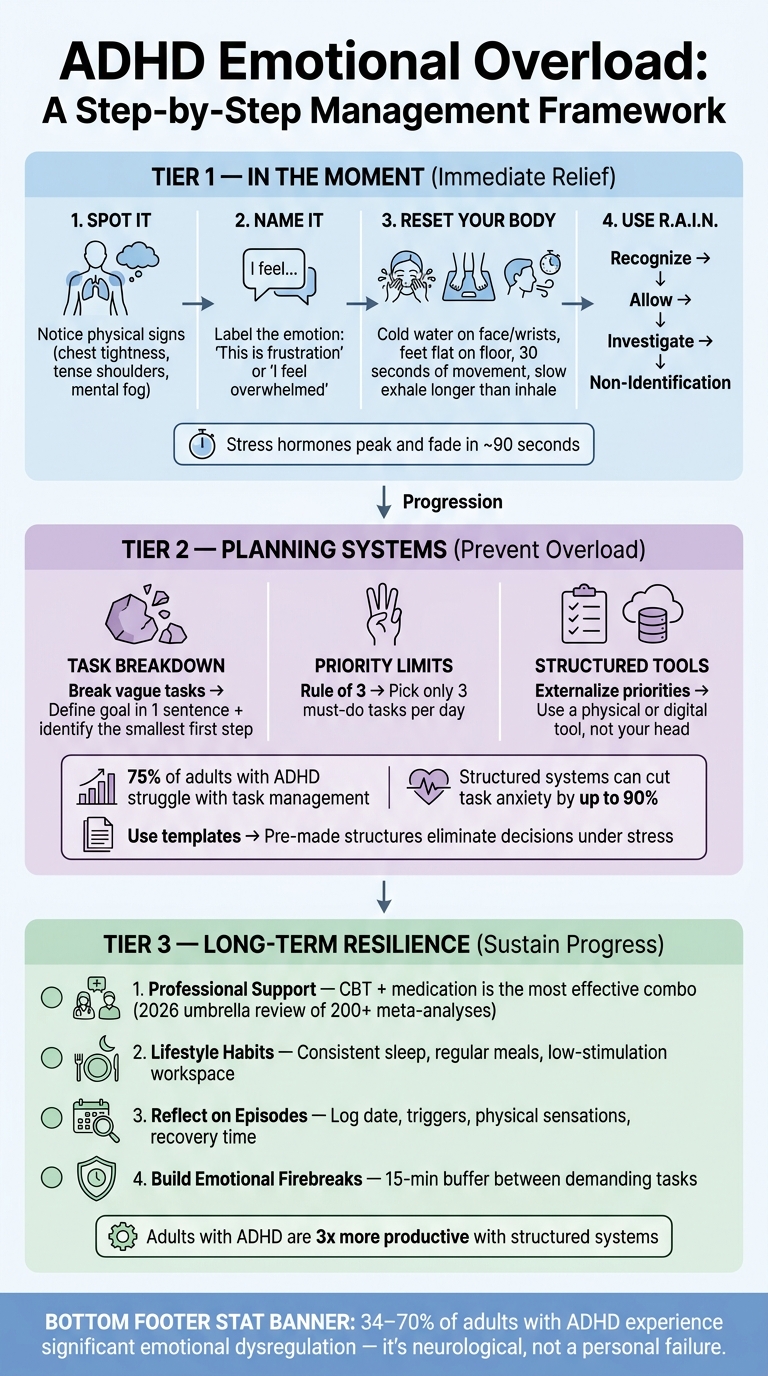
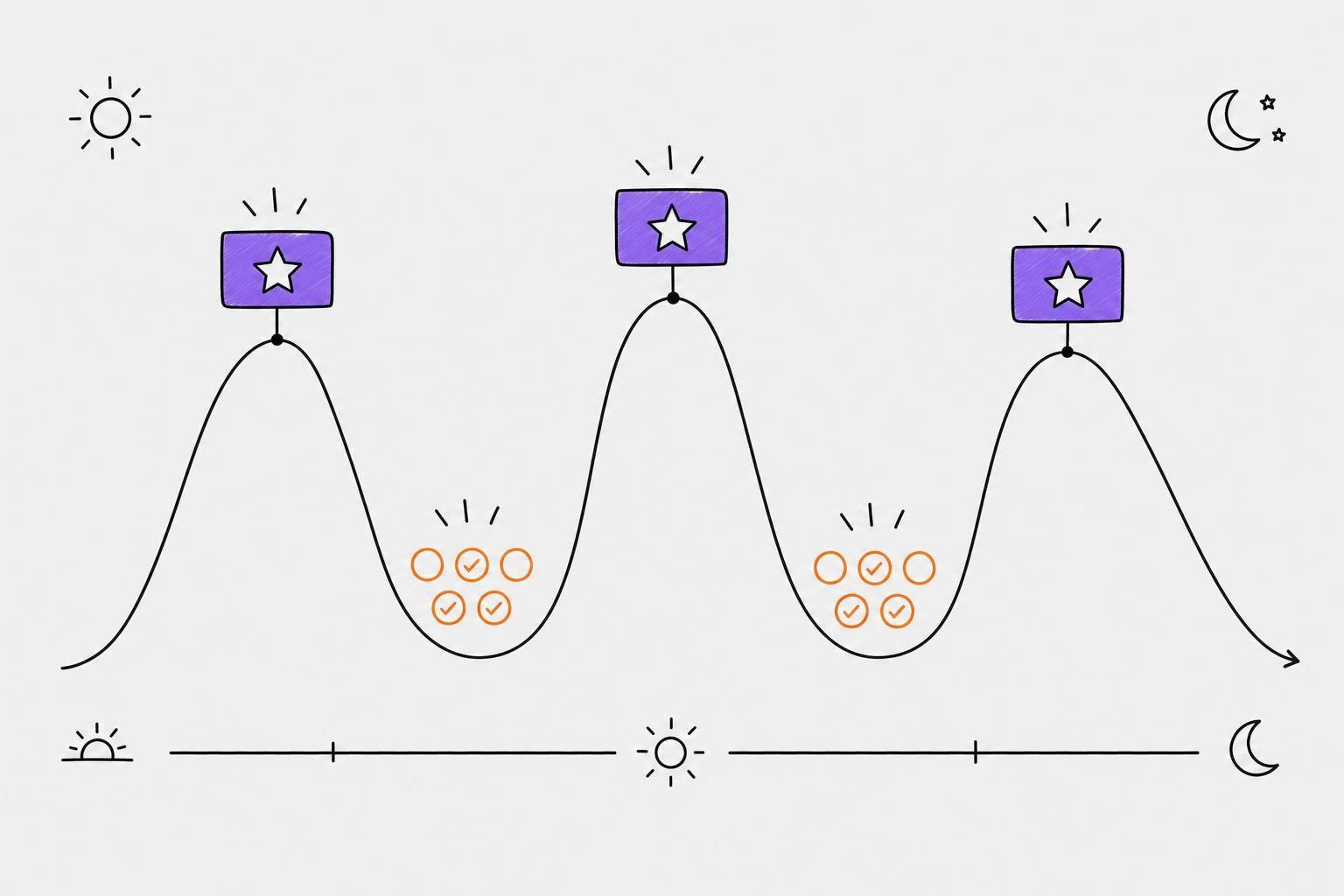
ADHD Emotional Overload: A Step-by-Step Management Framework
What Triggers Emotional Overload During ADHD Planning
How Executive Dysfunction Leads to Overwhelm
The ADHD brain isn’t lazy - it struggles to activate the executive skills needed for planning. Tasks like prioritizing steps, remembering details, and figuring out where to start depend on the prefrontal cortex, which tends to be underactive in people with ADHD.
This creates what’s often called a "filter failure": every demand - whether it’s a work deadline, a grocery list, or an unanswered text - feels equally urgent. Without a way to rank these tasks, everything becomes overwhelming. When the brain can’t process this flood of demands, the amygdala takes over, triggering a fight, flight, or freeze reaction. Even something as simple as a blank planner can feel paralyzing. This isn’t about lacking motivation - it’s a neurological challenge.
"What looks like procrastination is almost always activation failure. The ADHD brain isn't avoiding the task - it's stuck at the starting line." - Harold Meyer, Managing Director, The ADD Resource Center
Let’s take a closer look at how specific planning tasks can intensify these struggles.
When Planning Tasks Become Emotionally Charged
Certain types of planning tasks can push the ADHD brain into overload. For example, ambiguous tasks - like a project vaguely labeled “figure out the Q3 strategy” - don’t provide a clear starting point. This lack of structure can trigger an immediate freeze response.
Deadlines bring their own challenges. Because of time blindness, future deadlines often don’t feel real until they’re right around the corner. When that shift happens - from “not now” to “right now” - it can cause a sudden emotional spike, making it even harder to plan effectively.
On top of this, decision fatigue can drain mental energy. The ADHD brain often struggles to differentiate between small, low-stakes decisions and big, important ones. This rapid depletion of cognitive resources leaves less room for managing emotions.
These factors combine to create situations where planning becomes overwhelming.
Common Situations That Cause Overload
Certain scenarios are especially overwhelming for the ADHD mind, such as vague projects, lengthy to-do lists, unstructured time, or environments full of distractions.
When a task is missed, it often triggers a shame spiral. This emotional reaction can lead to avoidance, causing the backlog to grow. As the backlog increases, the emotional pressure to tackle it also rises, making the next attempt at planning even harder.
Dr. Michael Chichak, MD, Medical Provider at MEDvidi, explains this dynamic:
"Amygdala is the part of the brain that mitigates our fear response. For those dealing with ADHD, overstimulation can trigger amygdala and cause reactions that may seem exaggerated in response to minimal stimuli."
Understanding these common triggers lays the groundwork for implementing strategies to manage overwhelm - something the rest of this article will explore in depth.
sbb-itb-1b3be24
How to Manage Emotional Overload in the Moment
Spotting and Naming Emotional Overload Early
When tasks trigger ADHD-related emotional spikes, catching the signs of overload early is key. Often, it starts with physical sensations - tightness in the chest, tense shoulders, or a knotted stomach. Mentally, it might feel like your brain is juggling too many browser tabs, making even small decisions feel impossible.
Labeling your emotions - saying, "This is frustration" or "I'm feeling overwhelmed right now" - can help engage the brain’s logical side and slow down the amygdala’s alarm response. A helpful tool here is the R.A.I.N. method, which involves:
- Recognizing the emotion.
- Allowing it to exist without resistance.
- Investigating its trigger with curiosity.
- Using Non-Identification to remind yourself that the emotion is something you’re experiencing, not who you are.
Calming Your Nervous System Before Planning
ADHD-related emotional dysregulation often has a biological root, so calming your body is usually more effective than trying to think your way out of stress. When your body is in overdrive, logic doesn’t stand a chance.
Quick physical resets can interrupt the stress cycle. Try splashing cold water on your face or wrists, grounding yourself by pressing your feet flat on the floor, or doing 30 seconds of jumping jacks to activate your vagus nerve. Slow, steady breathing - where your exhale is longer than your inhale - can also signal safety to your nervous system.
It’s worth noting that the adrenaline and cortisol surge tied to stress typically peaks and fades within about 90 seconds. If the feeling lingers, it’s often because your brain is replaying the trigger.
"Soothing isn't optional - it's the foundation that brings your wiser self back online." - Dr. Anita Goraya, CBT/ADHD Therapist
Once your nervous system begins to settle, even slightly, tackling plans becomes less daunting.
Changing Negative Self-Talk
When planning hits a snag, the inner critic tends to show up. Thoughts like "I’ll never get this done" or "I’m just bad at this" might feel true, but they’re not. This is called emotional reasoning - treating feelings as if they’re facts.
The STOP skill provides an easy way to break this cycle:
- Stop.
- Take a breath.
- Observe your emotion by naming it.
- Proceed with awareness instead of reacting impulsively.
Once you’ve interrupted the spiral, identify the specific negative thought driving it. Then, look for at least one piece of evidence that contradicts it. If self-criticism persists, take a break for at least an hour to let your stress response settle before revisiting the issue.
"The system starts making sense when you stop treating your emotions as failures and start treating them as data." - Phuc Doan
Reframe these struggles as challenges with executive function, not personal flaws. Studies show that between 34% and 70% of adults with ADHD experience significant emotional dysregulation. This isn’t about failing - it’s a neurological reality that can be managed with the right tools. Once your emotions are under control and your self-talk is more constructive, you can start building systems to prevent overload in the future.
Systems That Prevent Emotional Overload During Planning
Breaking Vague Tasks Into Smaller Steps
For those with ADHD, vague tasks can feel overwhelming. When you're faced with something like "work on the project", it’s hard to know where to begin. Your brain has to create a structure from scratch before you can even start, which can drain your mental energy and leave you stuck.
"Ambiguity is invisible labor. It is cognitive labour and emotional labour." - Coach Katherine, ADHD Coach
A simple fix? Define the goal in one clear sentence, then identify the smallest possible first step. For example, instead of "write report", try "open the draft document and type the first heading." That tiny, specific action can break through the mental block and get you moving.
For tasks you do regularly, templates can be a lifesaver. Whether it’s a basic email outline or a weekly planning script, having a pre-made structure eliminates unnecessary decisions during stressful moments. Combine this with externalizing your priorities, and you’ll reduce the mental load even further.
Externalizing Priorities to Cut Decision Fatigue
Trying to juggle all your tasks in your head? That’s a recipe for overwhelm. Studies show that 75% of adults with ADHD struggle with managing tasks. Using an external system to organize your priorities can cut task-related anxiety by as much as 90%.
One practical strategy is the Rule of 3: pick just three must-do tasks for the day. This keeps your focus sharp and prevents the chaos of trying to tackle too many things at once. Any other tasks can go into a backlog for later.
"ADHD productivity breaks when you try to hold it all in your head or spread across too many apps." - Jessica Walsh, PMHNP, IN Focus First
To make planning easier, tie it to a daily habit like your morning coffee, using strategies that work with your brain. This small connection reduces the effort it takes to get started and makes planning part of your routine.
Using AI-Powered Tools Like Calma
AI tools can take external systems to the next level by simplifying the planning process. Calma was designed with ADHD in mind, shifting the mental workload from your brain to the tool itself.
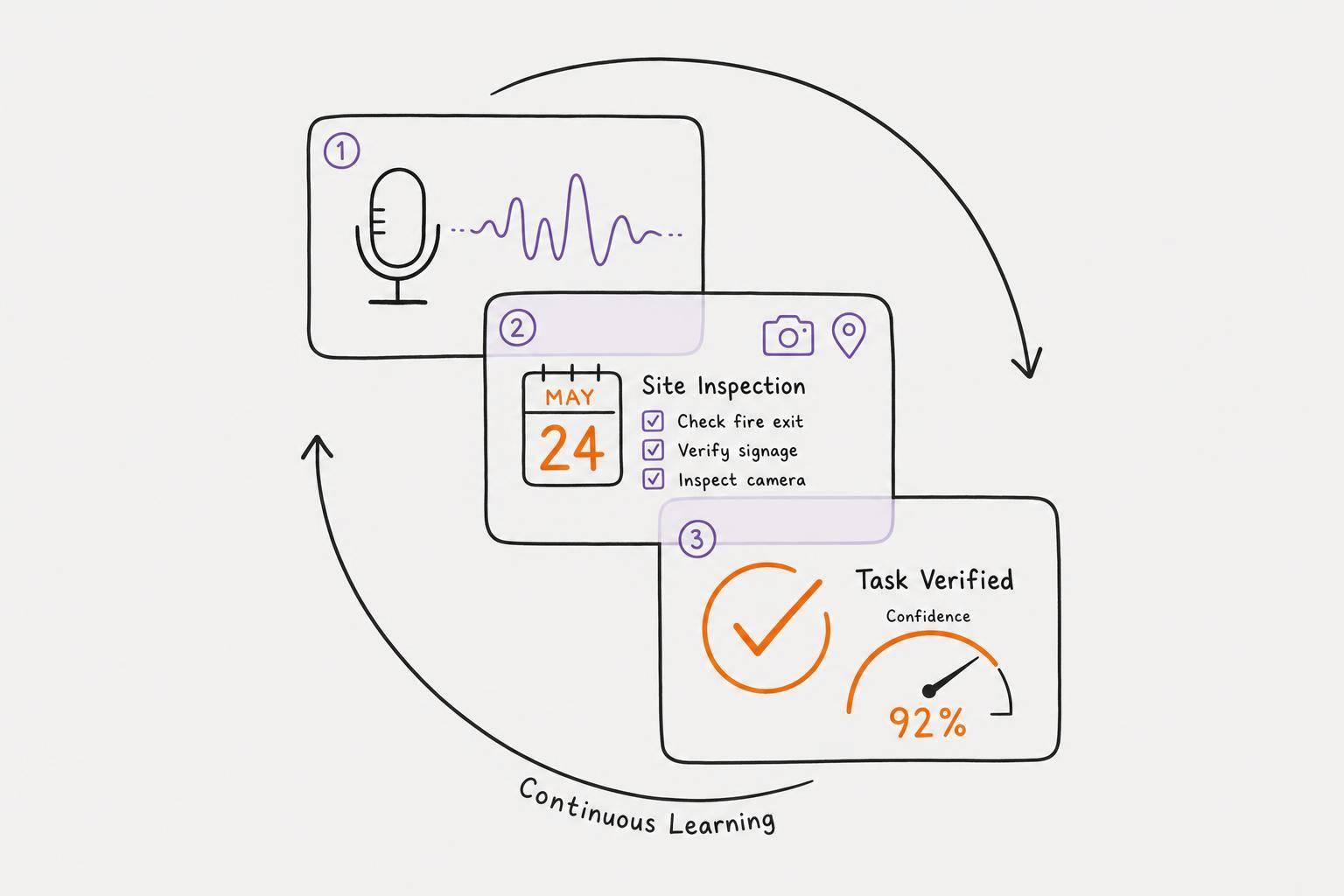
Here’s how it works: speak for 60 seconds, and Calma transforms your voice recording into an organized list of tasks. It automatically identifies due dates and highlights what’s most important. As one user shared:
"I love this because I basically use ChatGPT to voice dump at the beginning of the day... so this just makes the to-do list and voice dump all in one." - kenwshew, Calma user
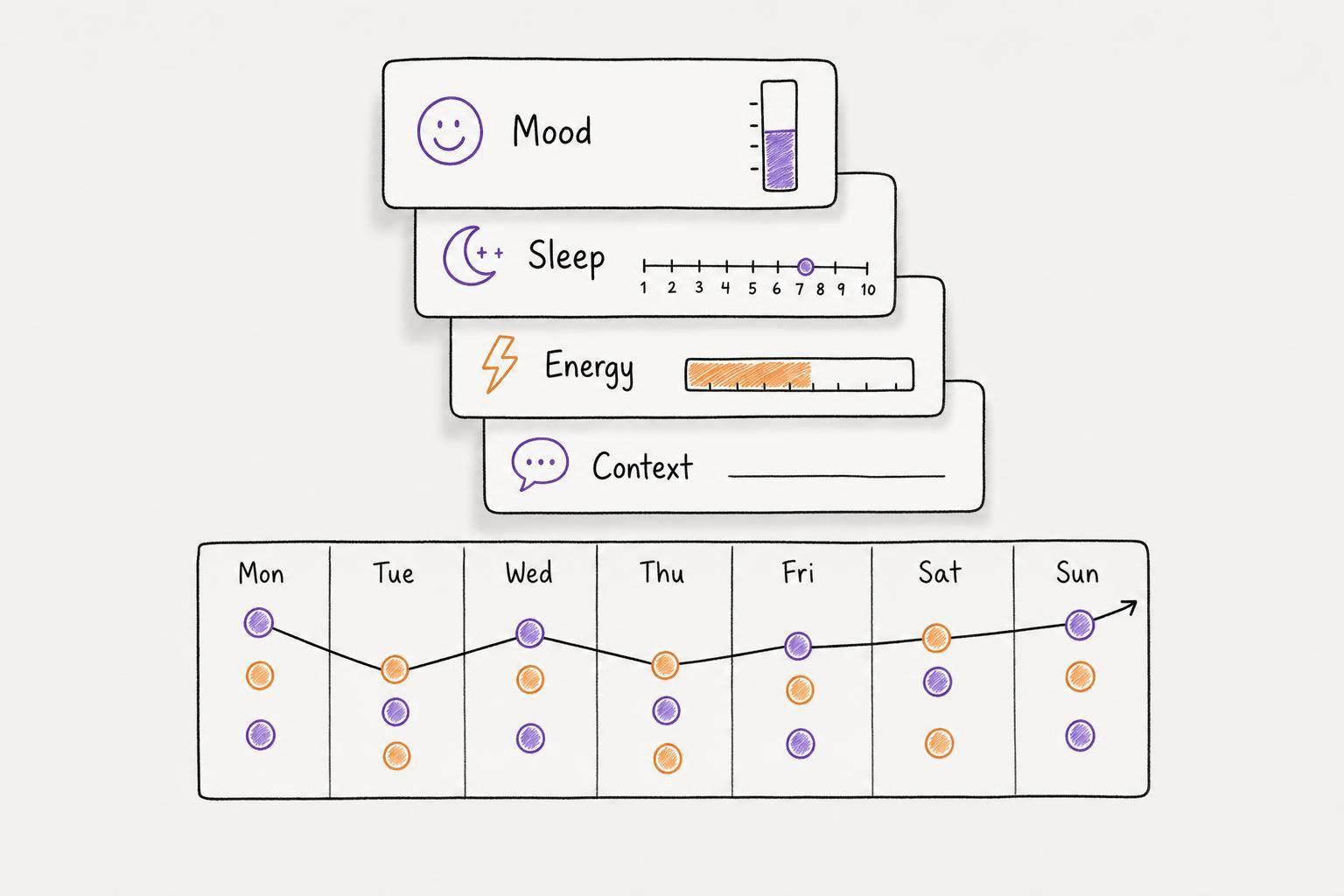
Calma doesn’t stop at task management. It also includes emotion tracking and visual habit progress grids, helping you spot connections between your mood and your planning habits. Its simple design keeps things focused, avoiding the clutter that can derail productivity. Research shows that adults with ADHD are three times more productive when they use structured systems, and by reducing the friction of getting started, tools like Calma make it easier to stick with your routines.
Calma offers a free version to try, while the Pro plan - at $2 per week or $39.99 annually - unlocks advanced features like voice AI, calendar integration, and unlimited habit tracking.
Building Long-Term Emotional Resilience for Planning
Getting Professional Support and Treatment
Short-term strategies can help in the moment, but building lasting emotional resilience often requires external support. An umbrella review from 2026, analyzing over 200 meta-analyses, found that combining medication with Cognitive Behavioral Therapy (CBT) is the most effective approach for managing adult ADHD symptoms. This combination allows individuals to address both the neurological and behavioral aspects of the condition.
"You don't need to 'try harder.' You need systems that work with your brain." - Emma McAdam, LMFT
Other therapies, like Dialectical Behavior Therapy (DBT) and Acceptance and Commitment Therapy (ACT), focus on strengthening distress tolerance. These approaches help individuals manage discomfort without shutting down or overreacting. On the medication side, stimulants improve the prefrontal cortex's ability to pause and process before reacting. Additionally, alpha-2 agonists like guanfacine specifically target emotional reactivity and Rejection Sensitive Dysphoria (RSD).
For more personalized support, an ADHD coach can help translate abstract strategies into practical, daily habits. Coaches guide individuals in creating external systems that compensate for executive function challenges, making it easier to stay on track. Professional treatment, paired with intentional lifestyle choices, lays the groundwork for stronger emotional resilience.
Stress Management and Lifestyle Habits That Help
Daily habits can either support or sabotage emotional regulation. Poor sleep, irregular eating, and sensory overload often make it harder to manage emotions effectively. For many with ADHD, a natural delay in melatonin release disrupts sleep patterns. Protecting a consistent sleep schedule is crucial for maintaining the emotional energy needed for tasks like planning.
Nutrition also plays a significant role. Regular meals help prevent blood sugar crashes, which can lead to irritability and impulsivity. Sensory management is another key factor. Setting up a low-stimulation workspace - think dim lighting, minimal clutter, and noise-canceling headphones - can reduce sensory overload and prevent emotional escalation.
When emotional hyperfocus or rumination interferes with planning, the "move a muscle, move a thought" technique can help. Taking a quick walk or doing a few stretches can interrupt those mental loops. These small, intentional actions not only calm your nervous system but also create the mental clarity needed to plan effectively.
Learning From Past Overload Episodes
Moments of emotional overload can feel overwhelming, but they also offer valuable learning opportunities. After an overload episode, jot down a quick note with the date and a brief description of what happened. This immediate snapshot allows you to reflect later when you're in a calmer state.
During that reflection, ask yourself questions like: What was I doing right before the episode? What physical sensations did I notice? Was I tired, hungry, or overstimulated? Over time, these notes can reveal patterns, such as specific triggers or early warning signs like increased noise sensitivity or physical tension.
Understanding how long it typically takes you to recover from overload can help you build "emotional firebreaks" - short buffer periods between demanding tasks. For instance, a 15-minute break after a tough meeting can keep the rest of your day from spiraling. By reframing overload as a neurological event rather than a personal failure, you can use these insights to refine your planning systems and maintain balance over time.
Build Your ADHD Emotional Resilience: Help for Adults Who Feel Deeply (with Tamara Rosier, Ph.D.)
Conclusion: Balancing Planning and Emotional Regulation
Managing emotional overwhelm in ADHD planning isn't about suppressing feelings - it’s about creating a framework where they don’t take over. Research shows that many adults with ADHD experience intense emotional dysregulation. This isn’t a personal shortcoming; it’s a neurological challenge that can be addressed with the right strategies. By layering these strategies, you can create systems that ease mental strain and prevent overload.
A layered approach works best. In the moment, simple techniques like naming the emotion you’re feeling or taking a quick, calming breath can stop the "snowball effect" before it spirals. On a broader scale, reducing cognitive strain - whether by using voice-to-text tools, ADHD productivity planner app options, or breaking tasks into smaller, more manageable pieces - eliminates the triggers that often lead to overwhelm. Over time, professional guidance, consistent habits, and reflective tracking help you identify patterns and address them before they escalate.
"By the time the snowball reaches the bottom, it's heavy, dirty, and hardened. We've lost contact with those important emotions at the top of the hill and the way forward is unclear." - Doug Mennin, Ph.D.
For instance, tools like Calma simplify planning by converting voice inputs into tasks in just 10–15 seconds, reducing decision fatigue that often derails ADHD planners. At $39.99/year, Calma combines voice-to-task conversion with mood tracking to make planning less of a struggle.
FAQs
How can I tell I’m about to emotionally flood while planning?
You might notice emotional flooding through signs like becoming irritable over minor tasks, struggling to make decisions, or feeling completely overwhelmed by your environment. Physical indicators often include muscle tension, a strong desire to give up, or difficulty concentrating. Spotting these signals early gives you the chance to pause and use tools like Calma to realign your tasks with your current energy levels and emotional state.
What’s the fastest way to start a vague task without freezing?
The fastest way to tackle an unclear task is by using voice capture to sidestep the mental hurdles of traditional planning. When you record your thoughts into Calma, you shift the burden of organizing and prioritizing, making the process feel less overwhelming. After that, pinpoint one simple physical action you can finish in under 60 seconds. Taking this small, straightforward step helps you avoid feeling stuck and gets the ball rolling.
How can Calma help when my brain feels too overloaded to plan?
When you're feeling overwhelmed, Calma steps in as your personal planning assistant to ease the mental load. Just speak your thoughts, and its AI will handle the rest - transcribing, organizing, and prioritizing your tasks. By aligning tasks with your energy levels and emotional state, Calma helps you maintain productivity and steer clear of burnout, even when staying focused feels out of reach.