Why ADHD Schedules Fail and How AI Helps
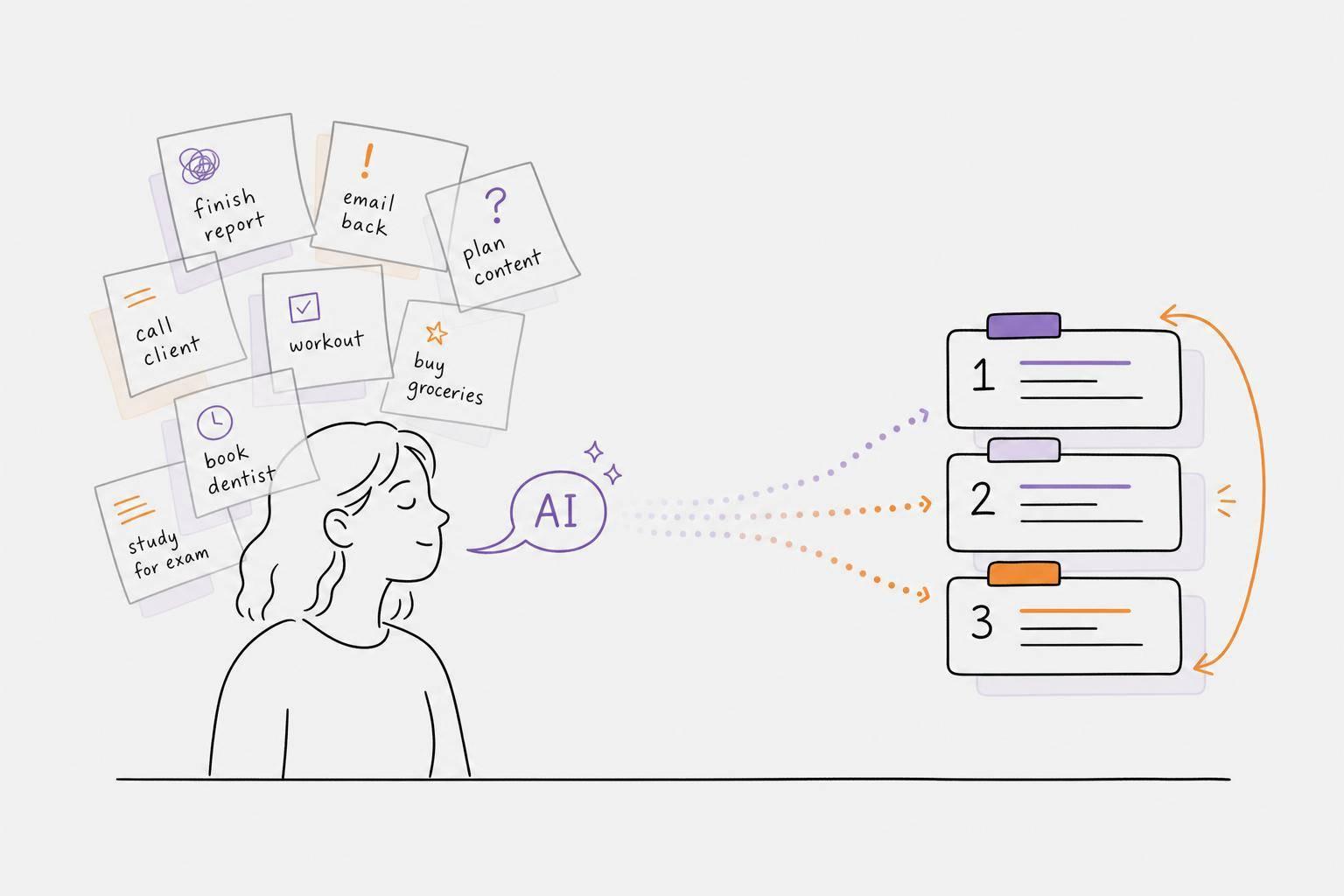
Managing schedules with ADHD is challenging due to issues like time blindness, unreliable working memory, and decision fatigue. Traditional ADHD productivity planner app options often fail because they assume consistent focus and energy - something ADHD brains struggle with. AI tools, like Calma, address these challenges by simplifying ADHD task management, prioritizing tasks automatically, and adjusting plans in real time. Here's how AI makes scheduling easier:
- Voice-to-Task: Quickly log tasks by speaking instead of typing.
- Smart Prioritization: Automatically ranks tasks by urgency and deadlines.
- Real-Time Adjustments: Easily update schedules with minimal effort.
These features reduce mental effort and make it easier to stay productive, even when plans change.
Why ADHD Schedules Break Down
Executive Dysfunction and Mental Overload
Most scheduling tools assume you already have the mental capacity to plan effectively. For someone with ADHD, this assumption creates an immediate hurdle. Before even recording a task, the brain has to estimate how long it will take, how urgent it is, and where it fits in the day. These seemingly small decisions can drain the already limited executive resources of someone with ADHD.
On top of that, working memory issues make scheduling even harder. Tasks can pile up quickly, and when plans fall apart, the unfinished items can feel like a "museum of past failures." This makes it even more daunting to revisit and re-engage with the schedule.
"ADHD is not a single problem. It is a cluster of executive function differences that interact with calendar management in specific, predictable ways." - UCals
These executive function challenges are compounded by ADHD’s unique relationship with time, which is explored further in the next section.
Time Blindness and Unrealistic Planning
Time perception works differently for people with ADHD, and this is one of the key reasons schedules often fail. As Dr. Russell Barkley describes:
"The ADHD brain [has] only two time zones: NOW and NOT NOW."
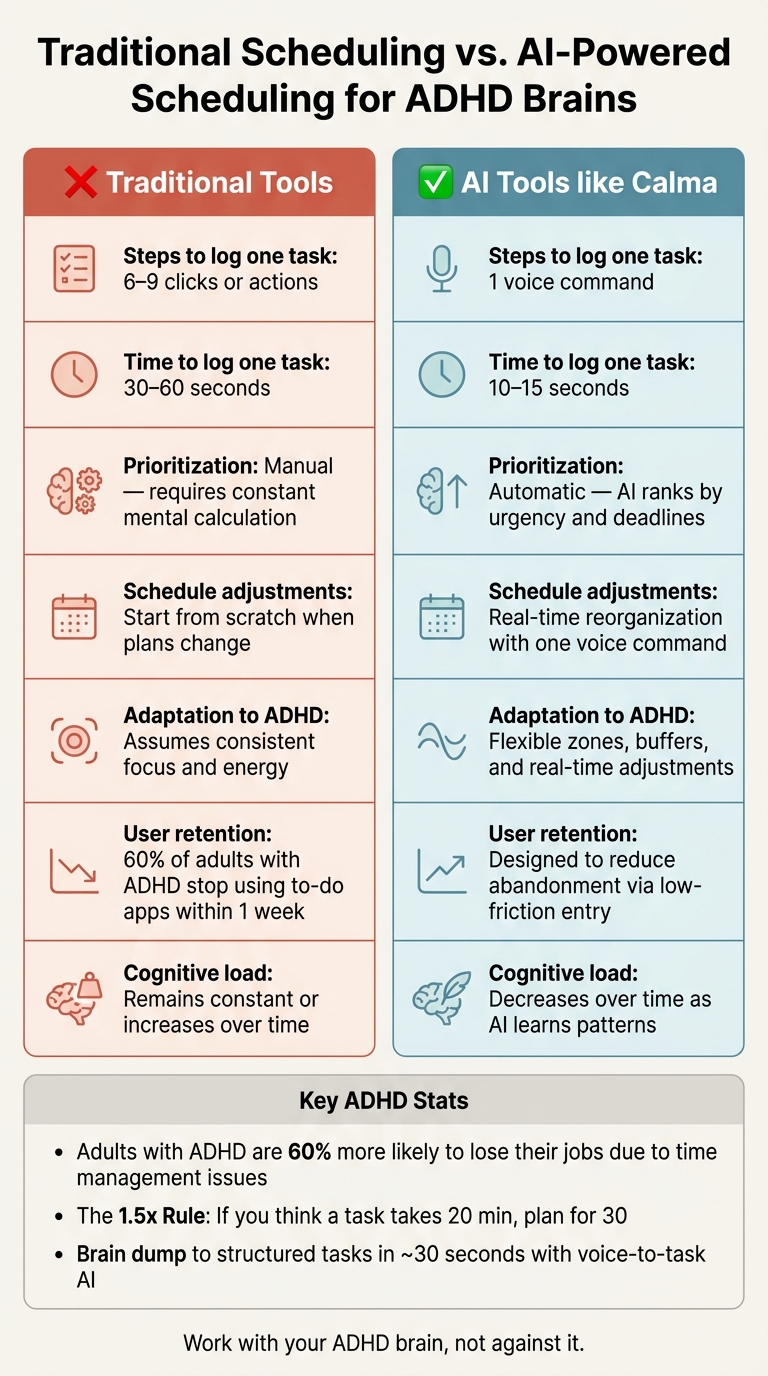
This distorted sense of time can lead to chronic lateness and missed deadlines. In fact, adults with ADHD are 60% more likely to lose their jobs, often due to these issues. A helpful strategy for countering this is the 1.5x Rule: if you think a task will take 20 minutes, plan for 30 instead. This simple adjustment can help offset the common tendency to underestimate how long things actually take.
Rigid Systems in a Changing Life
Beyond mental challenges, the natural unpredictability of ADHD complicates rigid scheduling systems. Energy, focus, and motivation can vary wildly - even within the same day. A work block that feels perfect at 9:00 AM one day might feel impossible the next, depending on factors like sleep quality or stimulation.
Then there’s the novelty effect. A new planner or system might work well at first, fueled by the excitement of trying something new. But as that dopamine rush fades, the ongoing effort to maintain the system can feel overwhelming. It’s no surprise that 60% of adults with ADHD stop using to-do apps within just one week. This isn’t about a lack of discipline - it’s about systems that aren’t designed for how ADHD brains actually function.
These challenges with traditional scheduling methods pave the way for more flexible, AI-driven planning tools that adapt to the unique needs of ADHD users.
sbb-itb-1b3be24
5 Practical Ways to Use AI To Help with ADHD (from an ADHD Therapist in NYC)
How AI Tools Fix ADHD Scheduling Problems
Traditional Scheduling vs. AI Scheduling for ADHD Brains
Voice-to-Task Features Minimize Effort
The hardest part of scheduling often isn’t managing the schedule itself - it’s getting started. As the UCals team explains:
"The cognitive cost of initiating calendar management often exceeds the cognitive cost of actually doing it."
Most traditional apps require 6–9 steps just to log a single task. For someone with ADHD, where executive function is already stretched thin, these extra steps can feel overwhelming, making it hard to even begin.
Voice-to-task tools completely change the game. Take Calma, for example. Instead of typing and organizing, you just speak your thoughts, and the AI organizes them into structured, prioritized tasks. No typing. No decision-making upfront. The whole process takes just 10 to 15 seconds per task, compared to the 30 to 60 seconds it takes with manual entry. By cutting down on effort, these tools make it easier to focus on what matters - getting things done.
Automatic Prioritization and Deadline Recognition
Once tasks are logged, deciding what to tackle first becomes the next hurdle. For ADHD brains, manually juggling deadlines and priorities can quickly lead to mental overload.
AI tools simplify this process by doing the heavy lifting for you. Calma, for instance, uses smart prioritization and automatic due date detection to pull out deadlines and rank tasks by urgency. This eliminates the need for constant mental calculations and directly addresses the executive function challenges that make prioritizing so tough for those with ADHD.
Adapting Schedules in Real Time
Even with a solid plan, life doesn’t always cooperate. A meeting might run long, a task could take twice as long as expected, or you might wake up feeling completely unfocused. For people with ADHD, these disruptions can derail an entire day, making it feel impossible to recover.
AI tools make bouncing back easier. With just one voice command, your schedule can be adjusted instantly. Calma’s AI processes updates on the fly, reorganizing your remaining tasks without requiring you to start from scratch. This flexibility lowers the barrier to re-engaging with your day, keeping productivity on track even when plans change.
How to Build an ADHD-Friendly Schedule Using AI
AI can be a game-changer for creating schedules that work with, not against, an ADHD brain. Here's how to use it effectively.
Step 1: Capture Tasks Without Organizing Them
Trying to organize tasks while capturing them is a recipe for overwhelm, especially for those with ADHD. Instead, start with a brain dump. Open an app like Calma, press record, and just talk. Whether it’s deadlines, errands, ideas, or worries, let it all out without worrying about structure or priority. Calma’s voice-to-task feature can take your recording and turn it into structured, prioritized tasks in about 30 seconds. This step is all about clearing your mind and letting the app do the heavy lifting.
Step 2: Create a Flexible Daily Structure
Once your tasks are recorded, it’s time to plan your day with ADHD. But instead of rigid time blocks, which can be hard to stick to, try creating flexible zones. For example, you might set “Morning: Deep Work” and “Afternoon: Admin and Emails” as general focus areas. Be sure to include 10–15 minute buffers between tasks to help your brain transition smoothly from one activity to the next.
On days when energy is low, focus on just the top three essential tasks and let the rest go. This "minimum viable day" approach prevents frustration when a packed schedule starts to unravel by mid-day.
Step 3: Refine Your Schedule With AI Feedback
Over time, patterns will emerge - like when you’re most focused or how long certain tasks actually take. Calma’s visual habit progress grids can help you spot these trends and adjust your schedule accordingly, reducing mental effort as you go. As the UCals team explains:
"The cognitive load decreases over time instead of remaining constant."
This feedback loop turns scheduling into a dynamic, evolving system that grows with you, making it easier to stay on track without constant stress.
Conclusion: Better ADHD Scheduling Starts with the Right Tools
Traditional planning systems often fail to align with the way an ADHD brain works. Rigid structures, time-consuming setups, and tools that require prolonged focus can derail productivity before it even begins. For example, creating a single event in a standard calendar might take 6 to 9 clicks or actions. For someone with ADHD, that kind of friction can be enough to abandon the system entirely.
AI-powered tools simplify this process by cutting down on unnecessary steps. Imagine creating an event with just a quick voice note or a single sentence - this small change can mean the difference between starting your day with purpose or feeling stuck. Beyond speed, these tools assist with decision-making, managing conflicts, and making real-time adjustments, freeing up mental energy for what really matters: getting things done.
Take Calma, for example. It’s designed to work with you, not against you. Features like voice-to-task conversion, smart prioritization, emotion tracking, and visual habit grids help lighten the mental load both immediately and over time. Priced at $39.99 per year for the Pro Annual plan, it offers a practical way to build a planning system that evolves with your needs.
The goal is to create a schedule that’s easy to start, adjust, and refine. With the right AI tools, your daily routine transforms into a system that works for you - not one that holds you back.
FAQs
How do I get started when planning feels overwhelming?
When planning feels like too much to handle, start with small, simple steps. One way to ease the burden is by using voice capture to quickly jot down tasks, cutting down on decision fatigue. Instead of tackling everything at once, focus on just three key tasks for the day. This approach keeps your mind clear and prevents feeling stuck.
AI tools, like Calma, can make this process even smoother. They can take your voice recordings and turn them into prioritized tasks with deadlines, giving you a clear starting point. To make things even easier, align your tasks with your energy levels. This way, you can ease into planning and gradually build momentum.
Can AI help if my energy and focus change throughout the day?
AI can be a game-changer if your energy and focus tend to ebb and flow throughout the day. For instance, tools like Calma can analyze your mood, energy levels, and task patterns to sync your schedule with your natural energy rhythms. This means tackling demanding tasks when you're at your peak and reserving simpler ones for those lower-energy moments. Plus, AI's ability to adapt in real-time means you’re not stuck with rigid schedules that ignore how your energy shifts, helping you plan more effectively and avoid unnecessary frustration.
How can I make my schedule realistic with time blindness?
To manage time effectively while dealing with time blindness, it's helpful to externalize time and set up systems that support you. Here are some practical strategies:
- Double your task time estimates: This helps avoid underestimating how long things will take.
- Add 5–10 minute transition buffers: These short breaks between tasks can prevent feeling rushed.
- Use visual timers or tools: Options like analog clocks or apps like Calma provide clear signals to track time.
- Try fixed time blocks: Structuring your day with dedicated time slots can improve focus and awareness.
Finally, wrap up each day by identifying the key tasks for tomorrow. This small habit ensures you start with a clear plan in mind.