10 Mental Health Benefits of Habit Tracking
- Which Habit Trackers Work for ADHD & Autism (Bullet Journal Tips for Neurodivergent Brains)
- Quick Comparison
- Why Habit Tracking Supports Mental Wellness
- 1. Reduced Anxiety
- 2. Better Sleep Habits
- 3. Improved Mood Awareness
- 4. Stronger Self-Esteem
- 5. More Motivation
- 6. Greater Consistency
- 7. Lower Mental Load
- 8. Better Stress Management
- 9. Stronger Self-Awareness
- 10. A Greater Sense of Control
- A Quick Look at Habit Tracking Methods
- Conclusion
- FAQs
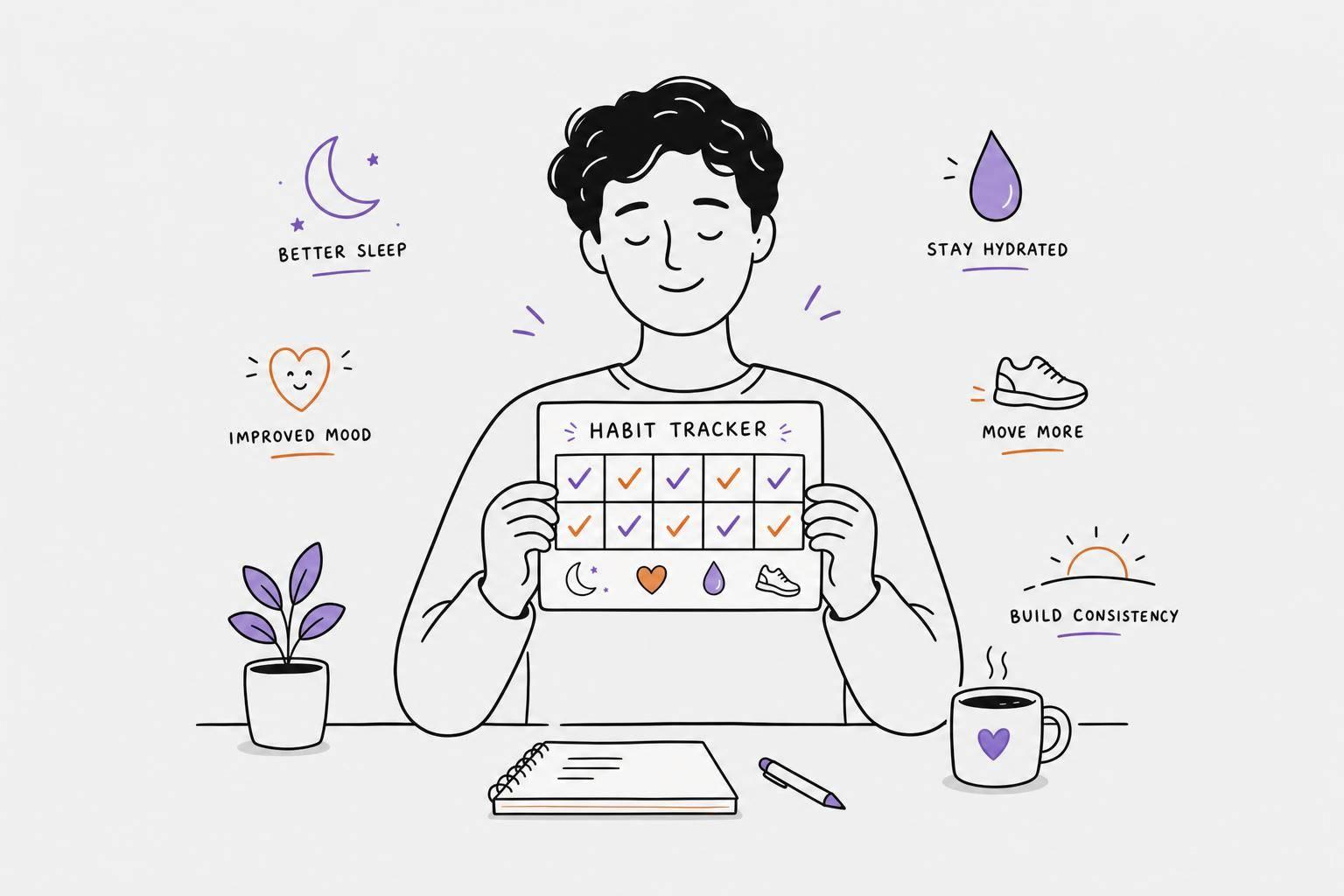
Habit tracking can make daily life feel less chaotic. In plain terms, it helps me see what I did, spot patterns in sleep and mood, and keep small routines going even when energy is low.
Here’s the short version:
- I can use habit tracking to lower anxiety by cutting guesswork
- It can help me build better sleep habits
- It makes mood patterns easier to spot
- It can support self-esteem by showing proof of follow-through
- It helps keep motivation going through small daily wins
- It supports consistency when willpower drops
- It lowers mental load by getting tasks out of my head
- It helps me catch stress patterns early
- It builds self-awareness around triggers and support habits
- It gives me a stronger sense of control over my day
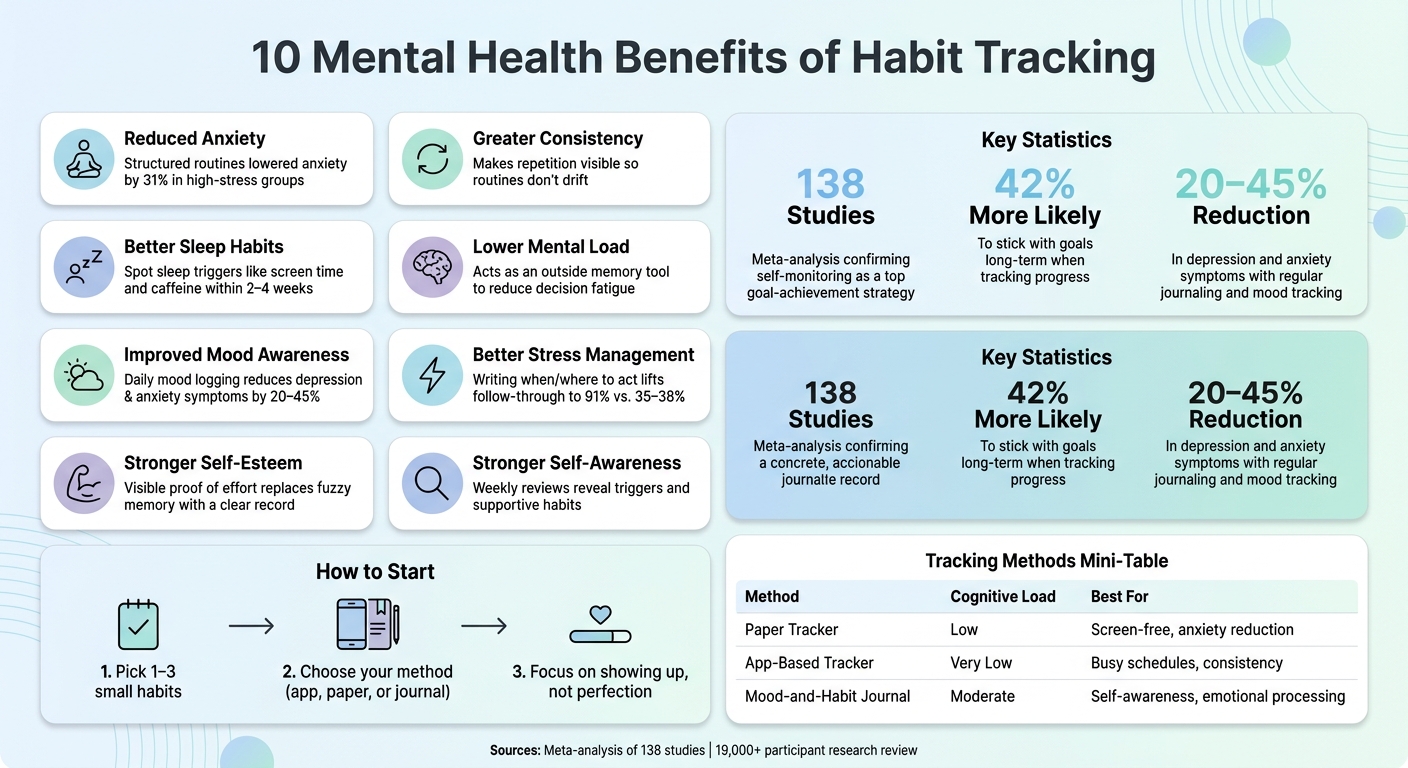
A few numbers stand out. A 2016 meta-analysis of 138 studies found self-monitoring is one of the most steady ways to reach goals. The article also points to a 42% higher chance of sticking with goals long term when people track progress, plus mood and journaling data tied to 20% to 45% lower depression and anxiety symptoms.
If I want to start, the article’s main advice is simple: track 1 to 3 small habits, use a fast system, and focus on showing up instead of being perfect.
10 Mental Health Benefits of Habit Tracking
Which Habit Trackers Work for ADHD & Autism (Bullet Journal Tips for Neurodivergent Brains)
sbb-itb-1b3be24
Quick Comparison
| Benefit | What it helps with | Simple way to start |
|---|---|---|
| Reduced anxiety | Less uncertainty | Track 3 to 5 yes/no habits |
| Better sleep habits | Sleep timing and triggers | Log bedtime, wake time, and one evening habit |
| Improved mood awareness | Mood pattern spotting | Use a 1–5 daily mood scale |
| Stronger self-esteem | Visible proof of effort | Track one promise I kept |
| More motivation | Daily progress I can see | Focus on the next checkmark |
| Greater consistency | Repeating routines | Shrink the habit on hard days |
| Lower mental load | Less to remember | Use the tracker as an outside memory tool |
| Better stress management | Early stress signals | Track sleep, movement, and breathing |
| Stronger self-awareness | Triggers and supports | Review entries once a week |
| Greater sense of control | Better day-to-day direction | Keep the system very simple |
If I want more calm, more structure, and fewer “I’m falling behind” thoughts, habit tracking is a simple place to start.
Why Habit Tracking Supports Mental Wellness
Habit tracking turns fuzzy routines into something you can actually see. Instead of going off a hazy feeling about how things are going, you have clear data in front of you. That small shift matters. It makes the link between your habits and your mental health much easier to notice.
How Visible Routines Cut Down on Guesswork
Uncertainty feeds anxiety. When your routine exists only in your head, it’s easy to assume you’re slipping, even when that’s not the case. Habit tracking works like an outside planning tool: it takes intentions out of working memory and puts them on a page or screen. That cuts cognitive load and frees up more mental space to act. With less guesswork, getting started feels simpler.
How Repeated Tracking Builds Follow-Through
The act of tracking by itself can improve behavior. If you know you’ll be checking a box at the end of the day, you’re more likely to do the thing. That checkmark gives a small sense of reward, which helps strengthen the habit.
Over time, those repeated wins start to shape how you see yourself. You’re not just trying to follow through. You become someone who does. That sense of momentum gets easier to spot as the days add up.
How Patterns Get Easier to Spot Over Time
A single day of data doesn’t tell you much. A few weeks can tell a very different story. Tracking can show patterns you’d probably miss otherwise, like which days you tend to skip habits or how poor sleep lines up with more anxiety.
People who monitor their progress are 42% more likely to stick with goals over the long term. That’s because tracking turns behavior into something you can look at and adjust. Apps like Calma can help you spot patterns without adding more mental strain. After a few weeks, tracking can show trends in sleep, mood, and missed days.
1. Reduced Anxiety
Mental Health Outcome
Anxiety often feeds on uncertainty - that nagging sense that something slipped through the cracks or that you're behind. A set routine can help cut that feeling down. In high-stress groups, structured routines lowered anxiety by 31%. When your habits are tracked and easy to see, that vague dread has less space to take over.
Why Tracking Helps
Each time you log a habit, you get instant proof that you followed through. That matters. Tracking makes your actions visible, so you're not stuck wondering how you're doing. It also cuts down on mental clutter. Instead of trying to hold everything in your head, you can look at the record and move on. Less second-guessing usually makes daily follow-through easier.
Practical Takeaway
Start small with 3 to 5 simple yes/no habits, like a 10-minute walk. That's enough to build a sense of control without making the system feel like work. A calmer starting point can also make bedtime routines easier to stick with.
2. Better Sleep Habits
Mental Health Outcome
Poor sleep can drag down your mood, focus, and ability to handle stress fast. A habit tracker helps you spot which behaviors are shaping your sleep. For some mood disorders, changes in sleep timing and duration can signal early shifts before a full episode begins.
What matters most is simple: you can see the triggers instead of guessing.
Why Tracking Helps
Sleep logs tend to be more accurate than memory. They can show how coffee, screen time, and late workouts connect to your sleep at night. Once you can see those links, it gets much easier to change your evening routine. In many cases, patterns start to show up within 2 to 4 weeks.
Practical Takeaway
Start small. Track just 2 to 3 habits:
- bedtime
- wake-up time
- one evening behavior, like screen use or your caffeine cutoff
A single missed entry won't throw off your progress.
Calma's visual habit grids let you check sleep consistency at a glance, and its emotion tracking helps you see how sleep shapes your mood. Those logs can also make next-day mood shifts easier to catch.
3. Improved Mood Awareness
Mental Health Outcome
When your habits are out in the open, your mood starts to make more sense. A mood log helps you connect emotional shifts to what happened around them, so you get clues you can use instead of guessing. It also creates a small pause between feeling something and reacting to it, and that gap often makes patterns easier to spot.
Why Tracking Helps
Focus on repeated links, not one rough day. Maybe your energy drops after late nights. Maybe your mood slips on days when you never get outside. Those repeat pairings are what matter, because they show you where to look.
Regular journaling for emotional processing can reduce symptoms of depression and anxiety by 20% to 45%.
Practical Takeaway
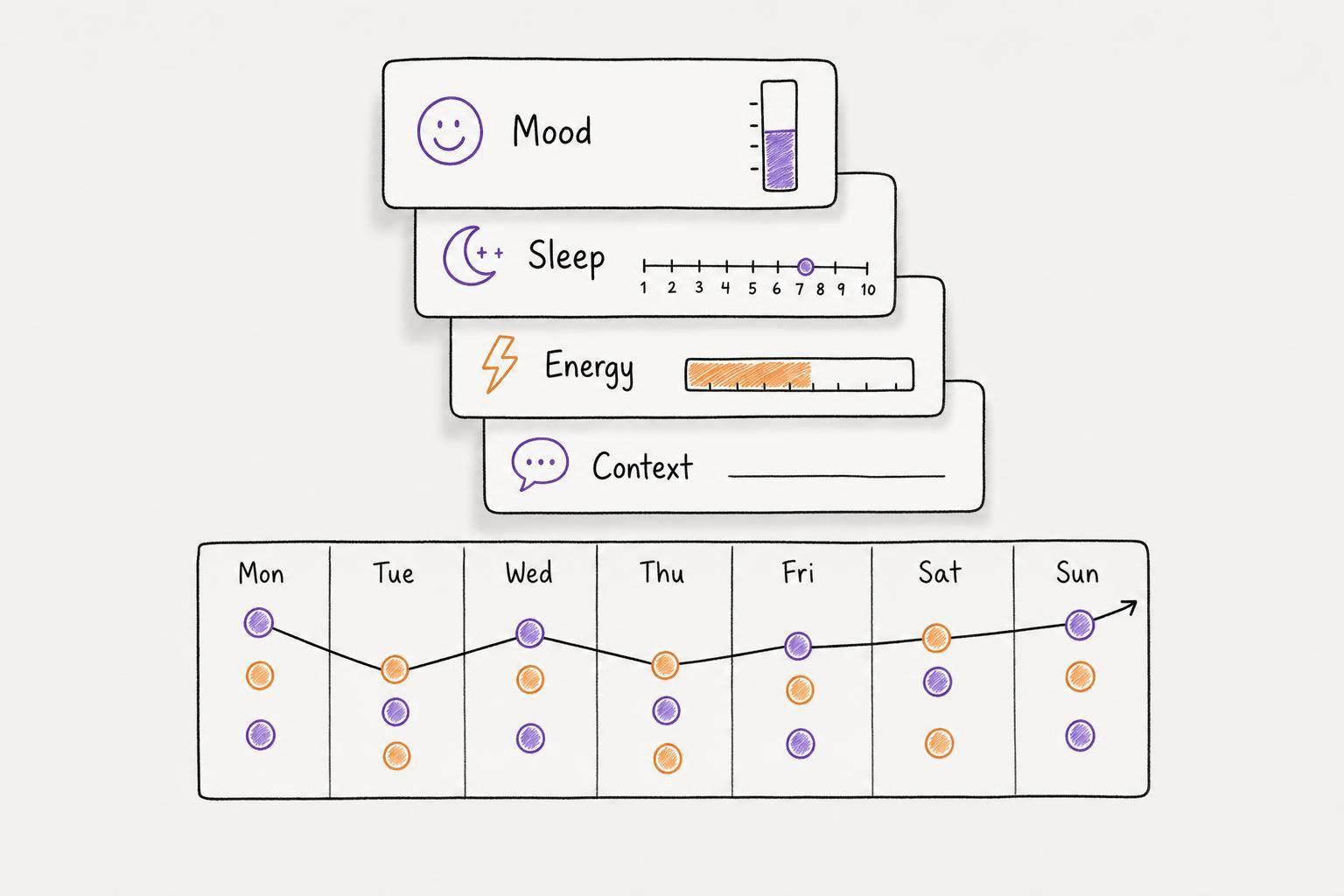
Daily mood logging is one of the simplest ways to see what helps and what throws you off. Use a 1–5 scale each day to rate your mood, stress, and energy. Then check the week as a whole:
- Mood - how you felt that day
- Supportive Habits - sleep, movement, social contact
- Context Clues - high workload, travel, or illness
Don’t overread each day. Review the full week instead.
Calma can show mood trends automatically, so you don’t have to sort through them by hand.
4. Stronger Self-Esteem
Visible progress can make a small win feel real.
Mental Health Outcome
Low self-esteem can shrink your sense of progress. You may do more than you think, then look back and feel like it barely counted. Habit tracking helps fix that by replacing fuzzy memory with a clear record of what you did. A checkmark gives your effort a visible form.
That change matters. It turns effort into proof.
Why Tracking Helps
Visible progress can push back on self-doubt. When self-esteem is low, it’s easy to judge yourself harshly. Good days fade fast, while bad days stick around. A tracker helps counter that pattern with something plain and concrete: data you can see.
It also helps to track the process instead of the result. You can’t control every outcome. But you can track whether you showed up. That small shift helps build a steadier sense of self-worth.
Practical Takeaway
Two simple rules can help protect self-esteem:
- Keep habits tiny - two minutes or less - so they still feel doable on hard days.
- Use a never-miss-twice rule: if you skip one day, treat it like a one-off and return to the habit the next day.
Research suggests that missing a single day doesn't significantly derail habit formation.
Track one daily promise you kept. That visible proof can also make the next habit easier to start.
5. More Motivation
Visible progress does more than build confidence. It helps motivation stick around.
Motivation tends to drop when results take a while to show. Tracking fixes that by turning effort into proof you can see right now. Instead of waiting weeks or months for a big outcome, you have a record that says: I did the work today.
Mental Health Outcome
Invisible progress can drain motivation fast. When you can’t see movement, it’s easy to feel like your effort doesn’t count.
Tracking changes that. It turns abstract effort into clear wins you can point to, even before the long-term results show up. A single log entry is simple, but it still proves you followed through today.
Why Tracking Helps
Each checkmark gives you a small win. And small wins make the next step feel a little easier.
A tracker also gives you something concrete to review instead of forcing you to rely on memory. That matters more than people think. Research backs this up: a meta-analysis of more than 19,000 participants found that monitoring goal progress significantly increased the rate of goal completion.
Practical Takeaway
Focus on the next checkmark, not the whole journey.
If you miss a day, start again the next day. Missing twice can make it much harder to get back into the rhythm. And on hard days, go with the smallest version you can still finish.
6. Greater Consistency
Motivation gets habits off the ground. Tracking is what helps them stick. Its biggest job is simple: it makes repetition visible.
Mental Health Outcome
Steady routines can ease day-to-day uncertainty. When your day has a familiar shape, you spend less mental energy figuring out what to do next.
That sense of predictability matters. A tracker gives you a clear view of whether the routine is still in place or starting to drift.
Why Tracking Helps
A tracker makes consistency easy to spot. You’re not guessing based on memory or leaning on willpower alone. You can see when the routine held, and you can see when it slipped.
Practical Takeaway
On low-energy days, make the habit smaller and keep the streak going. If you miss a full week, use that data as a sign to adjust the habit size.
7. Lower Mental Load
Habit tracking doesn't just help you stay consistent. It also clears some space in your head.
Mental Health Outcome
Working memory fills up fast when you try to keep too many habits in mind at once. A tracker cuts that mental load because you don't have to remember every task on your own. That matters. Fewer forgotten tasks can mean less overwhelm, especially when your working memory is already stretched thin.
Why Tracking Helps
A habit tracker works like an outside memory aid for planning and recall. It cuts down on decision fatigue and makes follow-through feel easier.
Writing down when and where you will exercise can greatly improve follow-through.
Practical Takeaway
Use the tracker as an outside memory tool, not a scorecard:
- Start with 3 to 5 core habits
- Check in once a day
- Keep the system fast to complete
A simple tracker can also help you spot stress early, before it starts to pile up.
8. Better Stress Management
Mental Health Outcome
When your mental load drops, stress gets easier to notice before it boils over.
Most stress doesn't show up all at once. It stacks up through small misses: skipped meals, short sleep, and days packed too tight. Habit tracking helps you see those patterns early, which gives you a chance to step in before things spiral.
Why Tracking Helps
Stress can feel huge when it's hard to pin down. Tracking changes that. It turns a fuzzy feeling into something you can actually see on the page.
That matters because early warning signs are often small. Maybe you skip your evening wind-down. Maybe bedtime starts slipping. Maybe you go too long without eating. When those habits show up in your data, they're much easier to catch before stress spikes.
Practical Takeaway
During busy weeks, keep it simple. Track 1 to 3 habits that have a direct effect on how you feel, such as:
- sleep
- movement
- a short breathing exercise
A good prompt is: "After [existing routine], I will [stress-reducing habit]". Writing down when and where you'll do a habit can lift follow-through to 91%, compared with 35%–38% when you lean on motivation alone.
If you miss one day, try not to miss the next. The point is to collect enough steady data to learn what throws you off and what helps you reset.
Those same logs can also show emotional patterns, which makes self-awareness easier next.
9. Stronger Self-Awareness
Mental Health Outcome
Habit tracking helps you notice what affects your mood, energy, and behavior.
Why Tracking Helps
When you can see stress patterns on paper, things start to click. Weekly logs often show what day-to-day memory misses. You may notice your mood drops when you spend less time with other people. Or your energy tanks after two late nights in a row. That’s the kind of pattern habit tracking brings into view.
That shift matters. Instead of jumping to “something’s wrong with me,” you begin asking, what changed? Over time, that leads to better choices.
Tracking can also help you catch early warning signs, like more irritability or less sleep, before they grow into burnout. And that can change how you respond. These signs become signals to pay attention to, not just problems to push through.
Practical Takeaway
Set aside 5–10 minutes once a week to review your entries. Check for:
- your top two triggers
- your top two habits that seem to help
- one pattern that’s worth acting on next
If you use Calma, its emotion tracking and habit grids can make that weekly review faster. That kind of awareness can make change feel easier to handle.
10. A Greater Sense of Control
Once you can spot your patterns, you can do something with them.
Mental Health Outcome
Habit tracking helps you move from reacting to your day to guiding what happens next. That shift is where tracking starts to matter. It stops being passive observation and becomes action.
Why Tracking Helps
The same patterns that build self-awareness can also make the day feel easier to handle. Tracking turns fuzzy feelings into something concrete. When a day feels messy, your mind can start filling in the blanks with worst-case stories. A tracker breaks that cycle by giving you a plain record of what you actually did.
It also gives you something to look at when the day feels off. Instead of spiraling, you can pause, review the facts, and decide what to do next. That small pause can change the tone of the whole day.
Daily-Life Example
On a rough Tuesday, your tracker might still show three focused work sessions, a short walk, and a steady bedtime. That record doesn't wipe away stress, but it does pull you back to reality. You're not guessing anymore. You're looking at what happened.
Practical Takeaway
Keep your tracking system as simple as you can. The goal is a reliable log you’ll stick with, not a fancy setup. Calma's visual habit grids show progress at a glance. Sometimes one checkbox per habit is enough to make the day feel easier to handle.
A Quick Look at Habit Tracking Methods
If those benefits matter to you, the next step is picking a tracking method you can stick with. Not every habit tracker works for every person. The best option is the one you’ll still use on your hardest days.
Paper Trackers
A printed tracker is the simplest choice. It works well if you want a screen-free routine and can help you feel more grounded without adding digital friction.
It won’t remind you to check in or sort your data for you. So it tends to work best if you want a simple, hands-on system.
App-Based Trackers
Apps work like an external memory aid. That means less effort to keep up with your habits. Reminders, streak tracking, and visual progress grids can make it easier to stay consistent, which can help lower mental load and support steadier sleep habits.
Calma combines voice logging, habit tracking, mood tracking, and visual progress grids. That keeps the process low-friction when attention is limited.
If you want something a bit lighter and more reflective, a journal may be a better fit.
Mood-and-Habit Journals
A mood-and-habit journal sits in the middle. You track your habits and add a short reflection, which makes cause-and-effect patterns easier to notice. The tradeoff is simple: it takes more effort than checking a box, especially on difficult days.
| Method | Cognitive Load | Best For | Main Mental Health Goal |
|---|---|---|---|
| Paper Trackers | Low | Screen-free routines | Anxiety reduction, grounding |
| App-Based Trackers | Very Low | Busy schedules, ADHD, data trends | Consistency, lower mental load |
| Mood-and-Habit Journals | Moderate | Emotional processing, self-discovery | Self-awareness, mood awareness |
The right method should match your energy level, not just your best intentions.
Conclusion
These benefits all lead to one simple habit: track what you want to change.
Habit tracking helps because it makes your routines easy to see. That can ease anxiety, show patterns you might miss otherwise, and help you build momentum through small wins.
The best way to begin is to keep it small. Start with one or two habits. A good mix is one physical habit and one calming habit, like a 10-minute walk and 5 minutes of deep breathing.
If you miss a day, start again the next day. One missed day does not derail long-term progress.
What matters most is consistency, not perfection. Progress beats perfection. Even one checkmark on a hard day still counts.
FAQs
How long should I track habits before patterns show up?
Meaningful patterns often start to show up after 2 to 4 weeks of tracking, though the pace can differ from person to person.
Tracking for 75 days gives you a clearer view of what’s starting to feel automatic, what still needs a tweak, and how your overall well-being has shifted. Results often take time to catch up with effort, so steady follow-through matters more than short bursts of intensity.
What habits should I track first for mental health?
Start simple and keep it relevant: track just two or three habits at first so it doesn’t feel like too much all at once.
A good place to begin is with habits like:
- breathing exercises
- consistent sleep anchors
- screen-time boundaries
- daily mood or anxiety ratings
Calma can help you log these habits and see your patterns more easily.
Can habit tracking become stressful or obsessive?
Yes. Habit tracking can turn stressful or obsessive when you don't use it with care. If you track too many habits or chase perfect streaks, it can add anxiety, mental clutter, and a constant feeling that you always need to do more.
Once tracking stops feeling helpful and starts feeling like pressure, even one missed check-in can feel like a failure. Calma is built to ease that strain with a simple experience that cuts down mental load.