10 Habit Tracking Tips for People With ADHD
- 1. Use Voice-to-Task Apps for Quick Logging
- How to Build Habits with ADHD
- 2. Start with Visual Habit Progress Grids
- 3. Use Habit Stacking to Build New Routines
- 4. Start with Three Habits or Fewer
- 5. Set Micro-Habits with the Five-Minute Rule
- 6. Add Daily Rewards and Streaks
- 7. Enable App Widgets for Home Screen Visibility
- 8. Track Emotions Alongside Habits
- 9. Focus on Returning, Not Perfection
- 10. Schedule Habit Reviews During Peak Energy Hours
- Conclusion
- FAQs
Building habits with ADHD is tough, but not impossible. ADHD brains face unique challenges like time blindness, low dopamine, and working memory issues. Traditional habit trackers often fail because they aren’t designed for these hurdles, unlike specialized ADHD productivity apps. This guide offers 10 practical tips to help ADHD adults create habits that stick by simplifying the process, using visual aids, and focusing on progress instead of perfection.
Key Takeaways:
- Use ADHD task management apps with voice-to-task features for easy habit logging.
- Rely on visual habit grids to keep progress in sight.
- Start small: focus on 1-3 habits at a time.
- Break tasks into micro-habits (e.g., 5-minute actions).
- Reward yourself frequently to boost motivation.
- Use widgets for home screen reminders.
- Track emotions alongside habits to spot patterns.
- Focus on bouncing back after missed days, not perfection.
- Schedule habit reviews during high-energy times.
These strategies are designed to work with your ADHD brain, not against it. Whether it’s using voice commands, celebrating small wins, or tracking habits visually, the goal is to make habit-building easier and more forgiving.
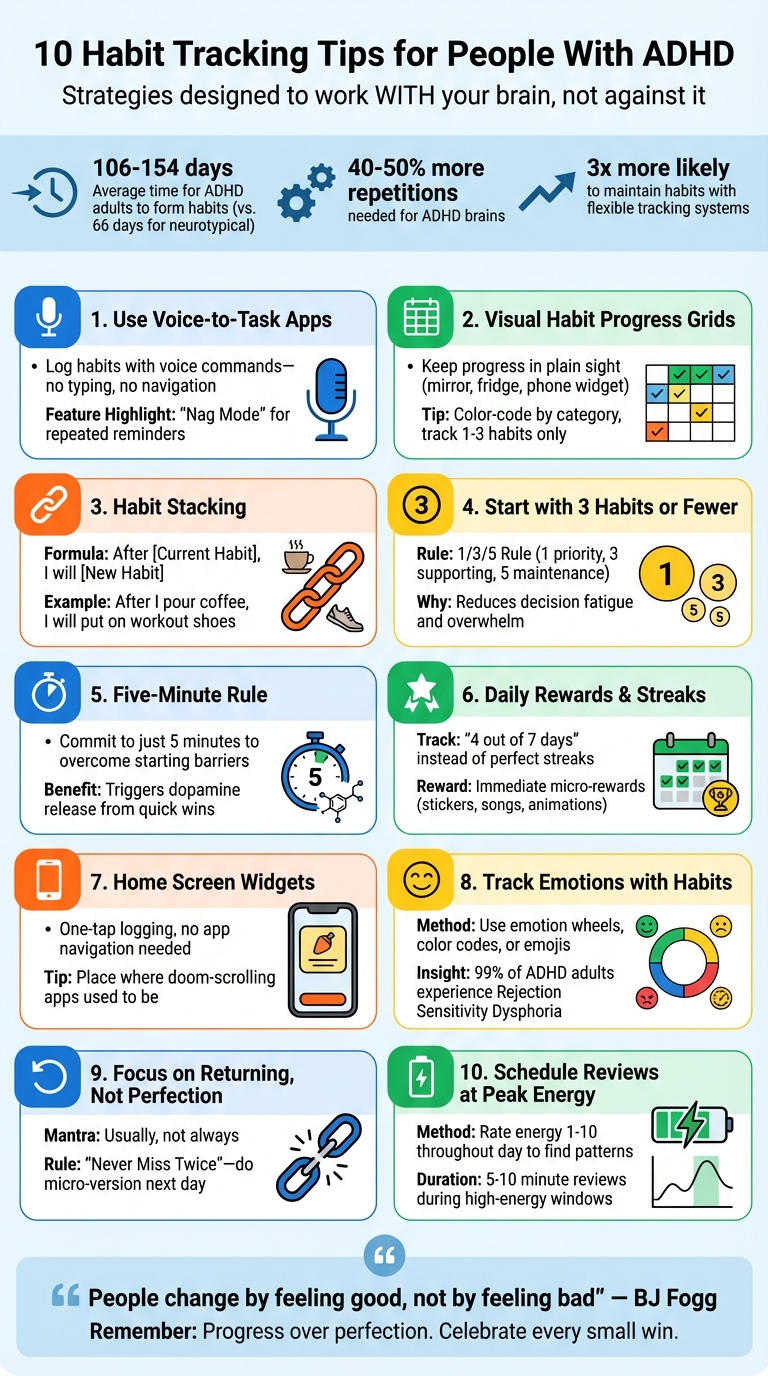
10 ADHD-Friendly Habit Tracking Tips: Visual Guide for Building Sustainable Routines
1. Use Voice-to-Task Apps for Quick Logging
Making Habit Tracking Easier
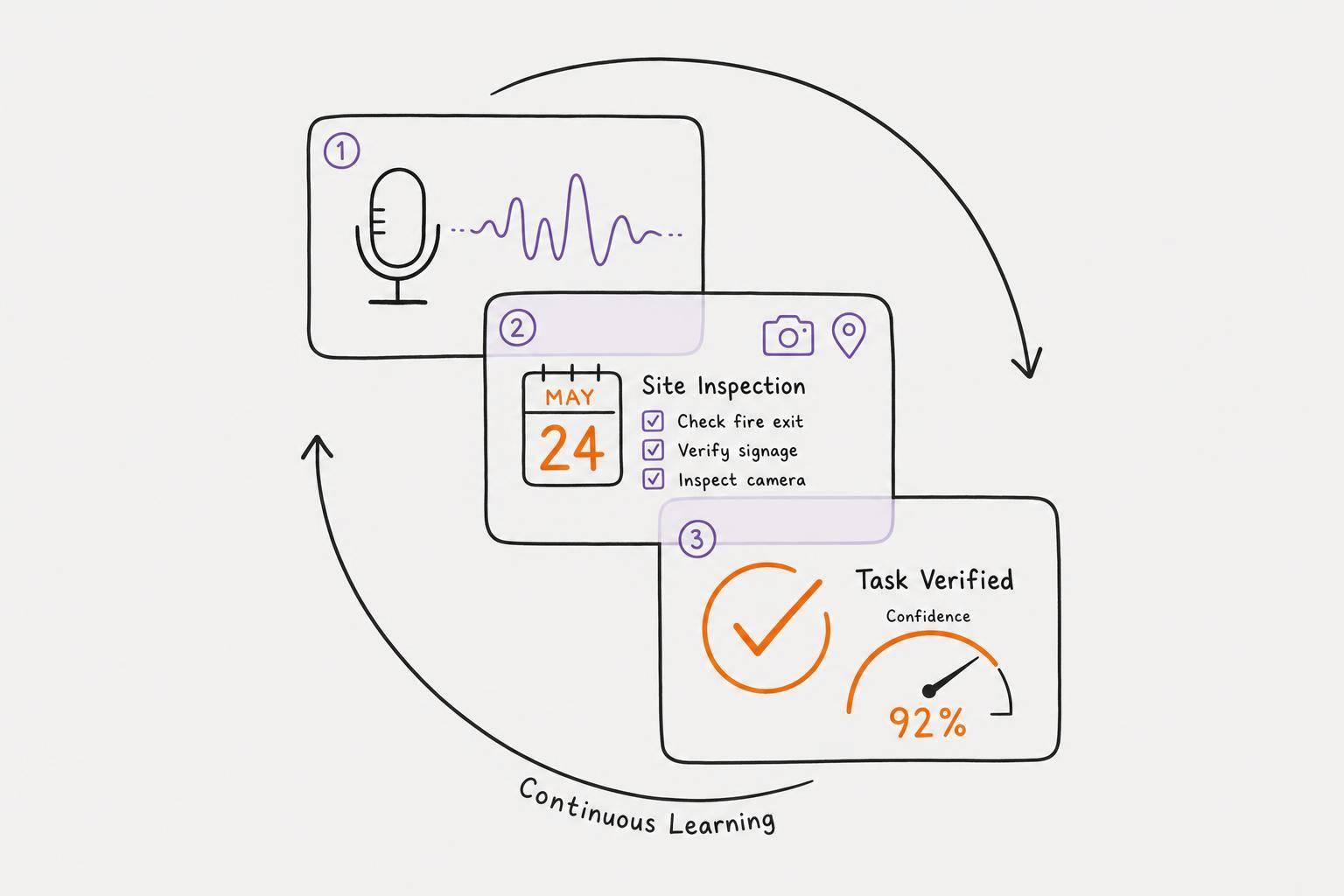
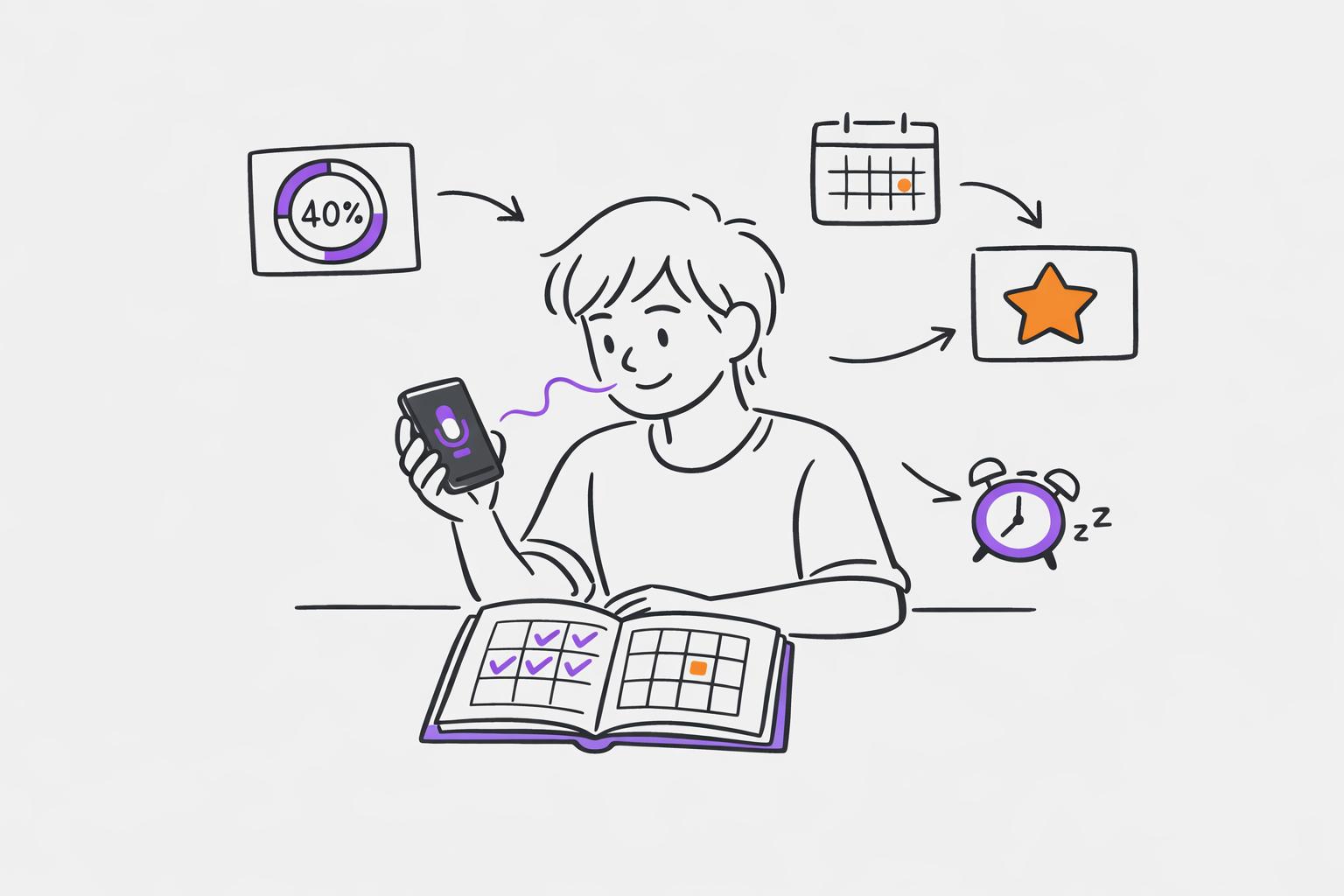
Opening an app, scrolling through menus, and typing out entries can feel like an uphill battle, especially when your mental energy is already stretched thin. Voice-to-task apps simplify this by letting you log habits with just a quick voice command. No typing. No navigating. No extra decisions.
"Executive functioning is like your brain's project manager... this mental project manager runs on limited daily energy that gets depleted every time you make decisions." - Maaya Hitomi, ADHD Coach, Tiimo
This approach cuts down on mental effort. Instead of fumbling through an app, you can just say, "I drank water" or "I went for a 10-minute walk", and the app takes care of the rest.
Built with ADHD in Mind
These apps aren’t just convenient - they’re designed to tackle ADHD-specific hurdles. Features like Nag Mode send repeated reminders until you log your habit, acting as a backup when your working memory falters. Some apps use AI-driven prioritization to sort your habits by urgency and context, so you don’t have to figure out what to focus on. On top of that, a clean, minimalist interface (with options like dark mode) helps avoid sensory overload and decision fatigue.
Tailored to Fit Your Life
Voice-to-task apps also shine in their ability to adapt to your personal needs. For instance, they can turn vague goals into actionable steps. Say "exercise more", and the app might suggest, "Put on your running shoes" or "Walk to the mailbox" - small, manageable tasks that help you get started without feeling overwhelmed. You can even set custom reminders and place habit-tracking widgets on your home screen, replacing distractions with gentle nudges to stay on track.
sbb-itb-1b3be24
How to Build Habits with ADHD
2. Start with Visual Habit Progress Grids
Pair your voice-to-task logging with visual tools that keep your progress in plain sight. These grids act as constant reminders, helping you stay on track without extra effort.
ADHD-Friendly Design
Out of sight, out of mind - that's often how the ADHD brain operates. Visual habit grids counter this by staying impossible to miss, especially when placed in high-traffic areas like your bathroom mirror, fridge door, or the inside of your front door. This way, you’ll bump into them multiple times a day without having to hunt through an app.
The design plays a big role, too. Use color-coding - like blue for health tasks and green for work - to make it easy to understand at a glance. Add stickers, checkmarks, or emojis to give yourself a quick reward every time you complete a task.
"Visual cues bypass many of these executive functioning demands by creating direct pathways from seeing something to doing something."
– Maaya Hitomi, ADHD Coach
Cognitive Load Reduction
Traditional habit trackers can feel overwhelming and drain mental energy. Visual grids, on the other hand, act as external supports, making it easier to remember tasks without overloading your brain.
Focus on tracking just one to three habits at a time. Research shows that ADHD brains need 40–50% more repetitions than neurotypical ones to form automatic habits. Trying to tackle too many habits at once can backfire. A simple layout - like a circle divided into seven segments for each day of the week - offers a quick and satisfying way to track progress.
Customizability for Personal Needs
Your habit grid should fit your lifestyle, not the other way around. If you enjoy the hands-on feel of marking progress, try tools like whiteboards or bullet journals. Prefer something techy? Use a digital widget on your phone for quick taps. Instead of focusing on perfect streaks, track completion rates - for example, "5 out of 7 days" feels far more achievable and forgiving.
Break habits down into their smallest, most manageable steps. Instead of committing to "exercise for 30 minutes", start with "put on workout shoes." This tiny, 2-minute action lowers the barrier to getting started. If your grid starts blending into the background, move it to a new spot every few weeks to keep it fresh and noticeable. These tweaks make tracking easier and set you up for the next step: rewarding yourself.
Motivation and Engagement Features
Forming habits takes longer for ADHD brains - 106–154 days on average, compared to the 66-day norm for neurotypical individuals. That’s why immediate rewards are so important. Use stickers, animations, or markers to celebrate each small win.
Forget the all-or-nothing mindset. Celebrate incremental progress - every completed task matters, even if there are gaps. If you miss a day, just leave the space blank. That blank isn’t a failure; it’s simply feedback about your energy levels.
"People change by feeling good, not by feeling bad."
– BJ Fogg, Behavioral Science Expert
3. Use Habit Stacking to Build New Routines
Habit stacking takes the idea of simple progress tracking and logging to the next level. It works by connecting a new behavior to something you already do automatically. Instead of depending on willpower or memory, you use an "anchor habit" - like brushing your teeth or making coffee - as the trigger for your new action. The formula is straightforward: "After [Current Habit], I will [New Habit]".
Making It Easier to Get Started
By tying new habits to existing routines, you reduce the mental effort of deciding when to act, easing the strain on your brain's executive functions. Starting small is key - use the 2-minute rule to break your habit down into something quick and manageable. For example, instead of committing to a full workout, you could say, "After I pour my coffee, I will put on my workout shoes." This tiny step lowers the barrier to getting started, making it easier to follow through even on tough days.
Tailoring It to Your Life
Choose anchor habits that are reliable and happen consistently, like feeding your pet, locking the door, or shutting down your computer after work. Avoid using irregular activities, like checking your phone, since they may not occur predictably enough to trigger your habit.
It’s also smart to have a backup plan for unpredictable days. For instance, if your goal is "After breakfast, I will meditate for 10 minutes", you could have a simpler alternative like "After breakfast, I will take three deep breaths". Pairing less enjoyable tasks with small rewards - like folding laundry while listening to a favorite podcast - can also make habits more appealing. These small wins help build momentum.
Staying Motivated and Consistent
For individuals with ADHD, forming habits may take more time - anywhere from 3 to 6 months compared to the average 66 days. Patience is essential. Habit stacking creates small successes, or "micro-wins", that release dopamine and reinforce the behavior. Focus on building one habit stack at a time and stick with it for at least three weeks before adding another.
Instead of aiming for perfection, track how often you complete the habit (e.g., 5 out of 7 days). Missing a day isn’t failure - what matters is bouncing back and staying consistent. For ADHD, progress isn’t about flawless execution but about resilience. Up next, we’ll explore other strategies to fine-tune your habit-building process.
4. Start with Three Habits or Fewer
Keep It Manageable for Your Brain
When it comes to building habits, less is more - especially for ADHD brains. Trying to track five or more habits at once can overwhelm your brain's executive function, which is already stretched thin. Each habit demands planning, initiation, and memory, and piling on too many can lead to burnout and abandoning the system altogether. Sticking to three habits or fewer helps reduce decision fatigue and works around the working memory challenges that often come with ADHD. This focused approach pairs well with other strategies we’ve touched on earlier.
Why Fewer Habits Work for ADHD
ADHD brains take longer to form habits - about 106–154 days compared to the neurotypical average of 66 days. Plus, repetition is key, requiring 40–50% more practice to make a habit stick. Keeping your list short - just one to three habits - ensures they stay top of mind. For people with ADHD, the saying "out of sight, out of mind" is all too real. A short list can easily fit on a sticky note for your mirror or as a widget on your phone, making it easier to stay consistent.
Tailor It to What Works for You
Simplifying your habit tracking doesn’t mean sacrificing effectiveness. Try the 1/3/5 Rule: focus on 1 priority habit, 3 supporting habits, and 5 maintenance habits. Start small - stick with one habit for 2–3 weeks before adding another. This forces you to prioritize what matters most and avoid the frustration of an overly ambitious list.
Even tools like Calma’s free plan, which limits you to three habits, align with this approach. Instead of seeing this as a limitation, think of it as a built-in safeguard against overwhelm. By focusing on fewer habits, you can build a strong foundation, gain momentum, and expand your goals only when you’re ready.
5. Set Micro-Habits with the Five-Minute Rule
Making Tasks Feel Manageable
For individuals with ADHD, starting a task can feel like climbing a mountain due to the high mental effort required to get going. The Five-Minute Rule helps break this barrier by asking you to commit to just five minutes. Instead of thinking, "I have to clean the entire kitchen", you shift your mindset to, "I'll clean for five minutes." This small step reframes the task, making it feel less like a never-ending chore and more like something achievable.
Tackling Time Blindness
Using a five-minute timer makes time feel real and measurable, which is incredibly helpful for those with ADHD who often struggle with time perception. A visual countdown timer, for instance, serves as a clear external cue, helping you stay grounded in the present. By lowering the initial effort required to begin, this approach often leads to momentum that keeps you going once you've started.
Adapting to Your Energy Levels
Flexibility is key when building habits. If you're low on energy, swap a 30-minute workout for a quick stretch or a short walk. Track these smaller actions in your habit tracker to maintain consistency. You can also experiment with different time intervals - some may prefer a 10-minute focus session followed by a 3-minute break instead of a longer 25-minute block. These small adjustments make starting easier and provide a sense of accomplishment right away.
Boosting Motivation Through Quick Wins
Completing a five-minute task triggers a dopamine release, which is especially valuable for ADHD brains that naturally have fewer dopamine transporters (3–5% less). These small successes give you the positive reinforcement needed to make habits stick. As behavioral science expert BJ Fogg highlights:
"People change by feeling good, not by feeling bad."
This approach not only makes habit formation manageable but also keeps you engaged and motivated through consistent, feel-good progress.
6. Add Daily Rewards and Streaks
Daily rewards can turn small wins into powerful motivators, reinforcing habits by making every effort feel rewarding.
Motivation and Engagement Features
For individuals with ADHD, immediate rewards are more than just a fun perk - they're a necessity. The ADHD brain thrives on dopamine boosts, and waiting weeks to see the benefits of a new habit often isn't effective. Instead, tying a small, instant reward to your efforts can make all the difference. Whether it’s playing a favorite song, adding a sticker to a chart, or enjoying a quick animation in your habit tracker, these micro-rewards create a direct link between your actions and their payoff. This connection not only feels good but also encourages you to keep going.
By incorporating instant rewards, you can also create a more forgiving and motivating tracking system.
ADHD-Friendly Design
Traditional streak systems can sometimes work against you. Missing a single day often resets your progress, which can be discouraging enough to abandon the habit entirely. A smarter approach is to focus on how often you complete a habit within a set timeframe - like aiming for "4 out of 7 days" - rather than striving for perfection. This method accounts for fluctuating energy levels and life’s unpredictability. In fact, research shows that adults with ADHD who use flexible tracking systems are three times more likely to stick with a habit for six months. Some apps even include features like "grace days" or extra lives, ensuring that one missed day doesn’t erase your progress.
Customizability for Personal Needs
A reward system works best when it’s tailored to your preferences, offering motivation that feels both immediate and personal.
Different strategies resonate with different people. For example, temptation bundling - pairing a less enjoyable task with something you love, like listening to a favorite podcast while tidying up - can make routine tasks more appealing. Gamification is another option. Some might enjoy caring for virtual pets that thrive as you complete tasks, while others prefer simple visual trackers like grids or charts. Another helpful rule is the "Never Miss Twice" guideline: if you miss a day, focus on completing the task the next day to avoid slipping into a longer break. These approaches help ensure that one misstep doesn’t derail your progress entirely.
7. Enable App Widgets for Home Screen Visibility
Simplifying Habit Tracking
App widgets are a game-changer for keeping your habits front and center. Instead of unlocking your phone, navigating to the app, and getting sidetracked along the way, widgets let you log habits with a single tap. This eliminates unnecessary steps that can drain your mental energy and create distractions . By placing your progress directly on your home screen, widgets make it easier to stay on track and act on your goals.
Widgets also serve as constant reminders, helping you avoid forgetting tasks . For individuals struggling to plan your day with ADHD, they can display progress indicators that keep you mindful of your daily goals .
Designed with ADHD in Mind
The placement of your widget matters - a lot. Position it where you’re most likely to notice it, like the spot previously occupied by your favorite "doom-scrolling" app. This simple change redirects impulsive phone use into a productive habit-checking routine. Over time, your brain will associate that spot with checking off tasks, reinforcing the visual tracking discussed earlier.
However, widgets can fade into the background if left in the same place for too long. To keep them effective, try moving them around your home screen or tweaking their colors every so often . You can also use features like iOS Focus Modes to customize which widgets appear at different times of day. For example, display your morning habits when you wake up and hide work-related tasks until later. These small adjustments make your habit tracking system more dynamic and adaptable to your daily flow.
Tailoring Widgets to Your Needs
Not all widgets are equally effective, especially for those with ADHD. Look for ones that offer one-tap logging so you can update your progress without opening the app. Color-coding is another helpful feature - assign colors to different habit categories, like blue for work tasks and green for health goals, to make it easier to process information visually . To avoid overwhelming your home screen, limit each widget to one to three high-priority habits .
"If you don't see it, you won't use it. Visibility reinforces usage." - EnvisionADHD
Calma’s widgets are built with these principles in mind. They offer quick logging and a visual progress grid right on your home screen. With the Pro plan, you can even unlock iOS widgets, giving you instant, seamless access to your habit tracker without any extra steps.
8. Track Emotions Alongside Habits
ADHD-Friendly Design
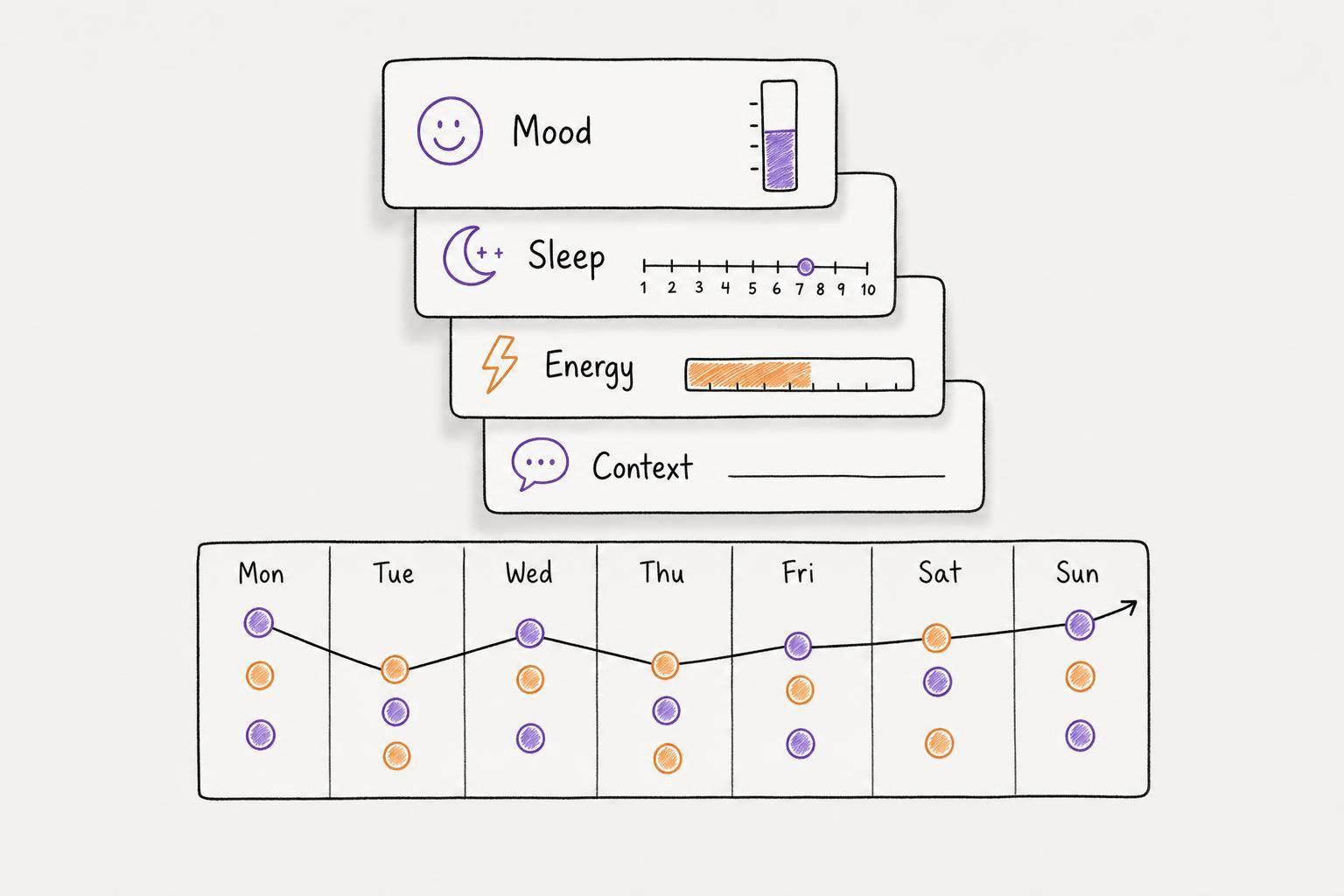
Adding an emotional dimension to habit tracking can provide a clearer picture of your daily patterns. For individuals with ADHD, recognizing and naming emotions can be particularly difficult. Instead of using vague labels like "good" or "bad", consider using an emotions wheel to pinpoint specific feelings such as "frustrated", "restless", or "overwhelmed." This approach makes emotions feel more tangible and manageable.
When you track emotions alongside habits, connections often emerge. For example, you might realize that skipping a morning workout leaves you feeling scattered later, or that crowded environments trigger anxiety and disrupt your routine. These insights allow you to make adjustments, like steering clear of certain triggers such as noisy spaces or tight deadlines.
Cognitive Load Reduction
To make emotion tracking sustainable, simplicity is key. Instead of lengthy journal entries, use tools like emojis, color codes, or basic symbols. For instance, assign red for high stress, yellow for moderate energy, and green for productive moments. These visual shortcuts make it easy to identify trends without sifting through detailed notes.
You can also tie emotional check-ins to existing habits through habit stacking. For example, do a quick mood check every time you close your laptop for lunch or before brushing your teeth at night. This minimizes the effort required to remember while seamlessly integrating the practice into your routine. Keeping it straightforward ensures your system adapts to your personal emotional needs.
Customizability for Personal Needs
Your tracking system should align with your energy levels rather than demand rigid consistency. Simple visual cues and personalized emotion logs can help you adjust the process as your energy fluctuates. Recognizing these natural variations - what some call a "B+ mindset" - can help you view imperfect consistency as normal, not as a failure.
"Try your best never to respond in the moment but let your emotions cycle through and come back into a place where you can pause, breathe, and think about things more rationally." - Caren Magill, ADHD Coach
Apps like Calma take customization a step further. For instance, its emotion tracking feature can detect your mood from voice journal entries, removing the need for manual logging. It also tracks mood trends over time, helping you see how emotions influence habit completion. With the Pro plan, you can combine unlimited habit tracking with emotion detection, giving you a fuller understanding of how your feelings impact your routine.
Motivation and Engagement Features
Traditional trackers often penalize missed days with broken streaks or red marks, which can trigger feelings of shame. Since a vast majority of adults with ADHD (99%) experience Rejection Sensitivity Dysphoria (RSD), it's essential to use a system that focuses on progress rather than perfection. Celebrate small wins, like completing habits five out of seven days, without worrying about the specific days you missed.
Pair emotional check-ins with immediate rewards to stay motivated. For ADHD brains, which have fewer dopamine transporters, immediate gratification plays a crucial role. For example, treat yourself to your favorite playlist or a small indulgence after tracking your emotions. This approach turns the process into something enjoyable, making it feel less like a chore and more like a rewarding part of your daily routine.
9. Focus on Returning, Not Perfection
ADHD-Friendly Design
When building habits, especially for adults with ADHD, the goal shouldn't be perfection - it should be about getting back on track after a slip. ADHD brains often interpret a missed day as a complete failure, triggering feelings of shame and leading to abandoned routines. Research shows that habit formation for ADHD adults takes 106–154 days on average, nearly double the 66 days it takes for neurotypical individuals. With such a long timeline, occasional breaks are unavoidable. The key is to focus on returning, not perfection.
"Consistency for ADHD isn't about perfection. It's about bouncing back. The goal is 'usually,' not 'always.'" - HabitsLab
Rigid, streak-based systems can be counterproductive, especially for those prone to inconsistency. Missing one day and resetting to zero often drains motivation. Instead, tracking habits as percentages - like "I completed this habit 70% of the time this month" - can be much more encouraging. This approach celebrates cumulative progress and provides the dopamine boost needed to stay motivated. In fact, ADHD adults using flexible tracking methods are three times more likely to maintain habits over six months.
Cognitive Load Reduction
Missing a habit can feel like a heavy emotional weight, often referred to as the "shame tax." This emotional toll drains the mental energy needed to resume the habit. To combat this, consider adopting a "Forgiveness Protocol", which normalizes missed days instead of treating them as failures. A simple rule to follow is the "Never Miss Twice" Rule: if you miss one day, commit to doing a micro-version of the habit the next day. For example, if you skip a 30-minute workout, spend just two minutes stretching instead. This keeps the neural pathways active and prevents a single lapse from becoming a long-term break.
Visual aids and immediate rewards can also help bridge attention gaps. By focusing on returning to habits without the need for perfection, you create routines that are easier to sustain over time. This flexible mindset naturally leads to more personalized habit-tracking strategies, which we’ll explore further.
Motivation and Engagement Features
Every time you return to a habit, celebrate it as a win. Restarting - even after a week-long break - is a testament to resilience. Small victories like these build momentum and reinforce the habit.
If procrastination gets in the way, try a "24-Hour Relapse Triage." This involves identifying the emotion behind the lapse - whether it’s anxiety, boredom, or overwhelm - and performing a quick, two-minute "rescue action" the next day to lower the barrier to returning. Since habits account for about 45% of daily actions, gradually getting back on track can shift nearly half of your daily routines onto autopilot. Next, we’ll dive into how to use your peak energy hours to further solidify these habits.
10. Schedule Habit Reviews During Peak Energy Hours
ADHD-Friendly Design
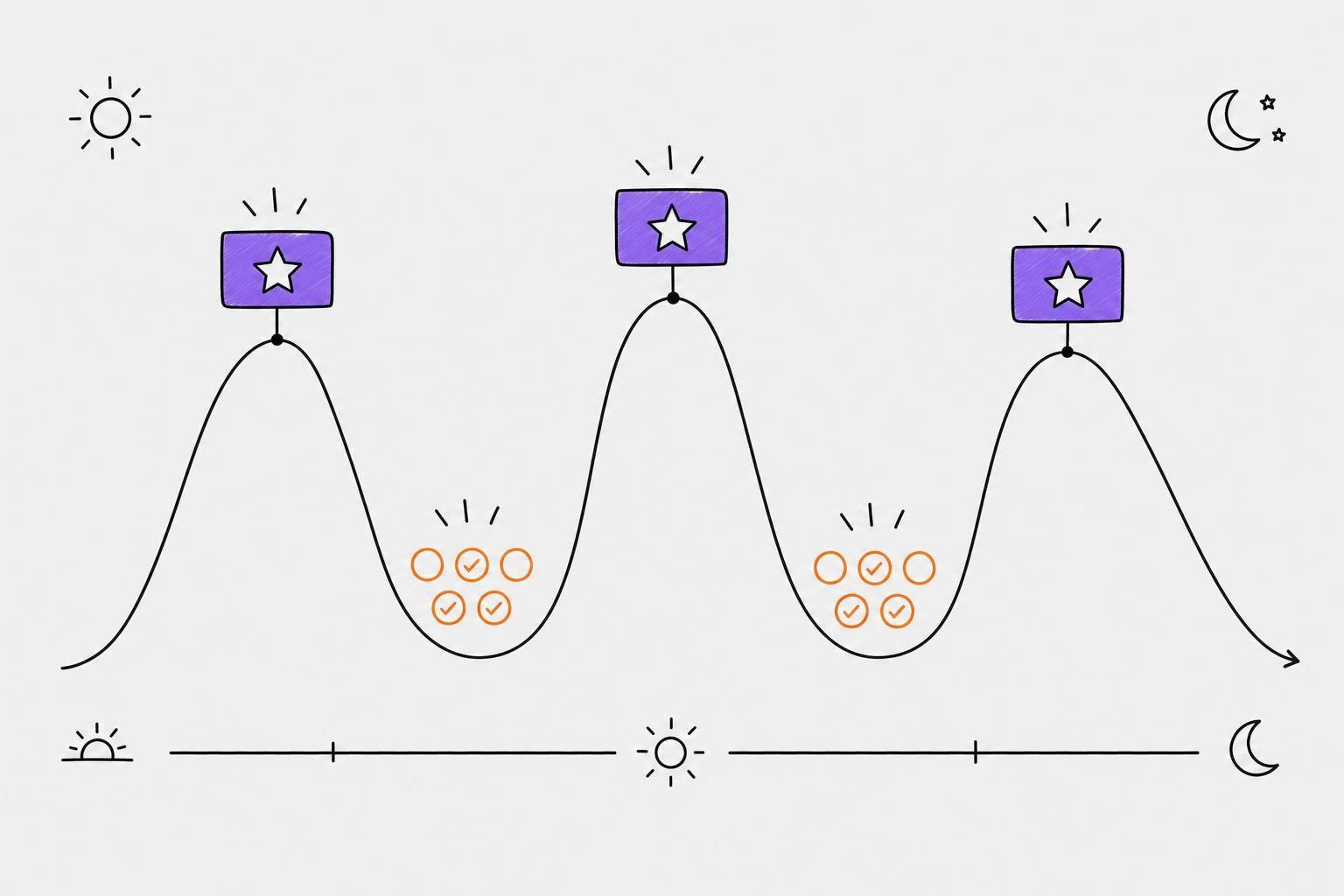
Plan your habit reviews during your peak energy times. For individuals with ADHD, this task requires executive functions like planning, attention regulation, and reflection - all of which are limited resources. By aligning reviews with your high-energy periods, you can reduce the mental strain involved.
Shifting from traditional time management to focusing on energy levels has been a game-changer for many adults with ADHD. Instead of forcing yourself to review habits at random times, try doing it when your dopamine levels are naturally higher. This strategy can also help you avoid the negative emotions that sometimes arise when reviewing missed habits during low-energy phases.
"Big change can happen for adults with ADHD when they shift their focus from time management alone to considering their energy and attention as equally important and equally finite resources." - Liz Welshman, ADHD Coach
This approach creates a framework that reduces cognitive effort and makes the process more manageable.
Cognitive Load Reduction
To figure out your peak energy hours, try rating your energy levels (on a scale from 1 to 10) at different points throughout the day - morning, midday, and evening. After a few days, you’ll start to notice patterns. For example, "Lions" often feel most energetic in the morning, while "Wolves" tend to hit their stride later in the afternoon, between 4:00 PM and 6:00 PM. Once you know your chronotype, set aside 5–10 minutes for habit reviews, guided by three simple questions: What went well? What felt challenging? Should I adjust this habit?.
If applicable, tracking your hormonal cycle can reveal phases of higher energy. These insights help you tailor your review routine to your natural energy flow.
Customizability for Personal Needs
A tailored schedule for habit reviews boosts consistency across different strategies. For instance, if you’re a "Dolphin" with unpredictable energy patterns, consider micro-reviews - quick 2-minute check-ins - rather than longer sessions. Use recurring phone alarms to remind yourself to check your energy levels until you recognize your natural rhythms. Wearable tech or apps can also help track your biological patterns without adding extra effort.
If you experience periods of hyperfocus, note when they occur. These moments can be ideal for tackling more demanding tasks like habit reviews. To make the process easier, externalize it: use phone widgets, visual planners, or calendar reminders to prompt reviews, so you don’t have to rely on your short-term memory.
Conclusion
Building consistent habits with ADHD isn’t about squeezing into rigid systems that don’t fit. It’s about creating approaches that align with how your brain works. The 10 strategies shared here are designed to lighten the mental load, provide quick dopamine rewards, and respect the unique way ADHD brains function. Tools like voice-to-task apps and visual habit grids aren’t just practical - they help you work with your ADHD brain rather than against it.
Research shows that adults with ADHD need 106–154 days and 40–50% more repetitions to form habits compared to neurotypical individuals. However, when flexible tracking systems are used - ones that focus on completion rates - ADHD adults are three times more likely to stick with habits after six months. This underscores the importance of prioritizing flexibility over perfection.
Your level of consistency might ebb and flow, and that’s okay. Whether you complete the full habit or just a quick two-minute version, every small step counts. As behavioral science expert BJ Fogg reminds us:
"People change by feeling good, not by feeling bad".
Self-compassion is a crucial part of the process.
Feel free to tweak and adapt these strategies to match your energy levels, preferences, and lifestyle. If a particular tracking method starts to feel dull after a while, don’t hesitate to try something new. ADHD brains thrive on novelty, so switching things up isn’t a failure - it’s a way to keep things engaging. Remember, the goal isn’t perfection; it’s aiming for "usually" instead of "always".
FAQs
Which 1–3 habits should I track first?
Start with small, easy-to-manage habits that fit seamlessly into your day. For example, drink a glass of water every morning or take a couple of minutes to stretch. These simple actions help you build consistency without feeling overwhelmed, which is especially helpful when managing ADHD.
How do I recover after missing a day?
It's completely normal to miss a day when you're building a habit. The important thing is to pick yourself up and get back on track without feeling guilty. Focus on staying consistent over the long run rather than dwelling on a skipped day. Be kind to yourself, adjust quickly, and ease back into your routine. A missed day doesn’t erase your progress - what truly counts is your ability to return with patience and a positive attitude to keep moving toward long-term success.
What’s the easiest way to track mood with habits?
The simplest way to monitor your mood while keeping track of habits is by using visual tools such as mood charts or visual schedules. These tools offer clear, easy-to-follow cues, making it less stressful to stay organized. By incorporating them into your daily routine, you can easily observe your progress, get instant feedback, and enjoy a sense of achievement - all in a way that works well for ADHD brains.